Whiskey Distillery Tours for Corporate Groups
A whiskey distillery tour gives your corporate group something most incentive experiences cannot: a shared sensory journey through production, history, and craft that unfolds at the pace of a pour. Ireland and Scotland together produce some of the world’s most celebrated spirits, and both regions have built distillery experiences designed specifically for corporate groups — from private production-floor tours to bespoke blending workshops with branded bottles.
Table of Contents
- Irish Whiskey vs Scotch Whisky: What Your Group Needs to Know
- Top Irish Distilleries for Corporate Groups
- Top Scottish Distilleries for Corporate Groups
- Private Blending Experiences and Cask Programs
- Food Pairing Dinners and Tasting Events
- Gin as an Alternative: The Craft Spirits Boom
- Group Logistics: Transport, Capacity, and Responsible Drinking
Irish Whiskey vs Scotch Whisky: What Your Group Needs to Know
Before your group sets foot in a distillery, understanding the fundamental differences between Irish whiskey and Scotch whisky transforms the visit from a pleasant outing into an informed appreciation. The distinction begins with spelling — and extends through every stage of production, maturation, and flavour.
According to the Irish Whiskey Association (Drinks Ireland), Irish whiskey is the fastest-growing spirits category globally, with exports exceeding EUR 1 billion annually and distillery visitor numbers surpassing 1.5 million per year. According to the Scotch Whisky Association, Scotch whisky exports reached GBP 6.2 billion in 2024, with distillery tourism contributing over GBP 100 million to Scotland’s economy. According to Tourism Ireland, whiskey tourism is now among the top three reasons North American visitors cite for choosing Ireland as a destination.
| Characteristic | Irish Whiskey | Scotch Whisky |
|---|---|---|
| Spelling | Whiskey (with an “e”) | Whisky (no “e”) |
| Distillation | Typically triple-distilled | Typically double-distilled |
| Primary grain | Unpeated malted barley (often with unmalted barley) | Malted barley (often peated) |
| Minimum ageing | 3 years in wooden casks on the island of Ireland | 3 years in oak casks in Scotland |
| Flavour profile | Smooth, light, fruity, honeyed | Complex, smoky, peaty, robust |
| Legal protection | Irish Whiskey Technical File (EU GI) | Scotch Whisky Regulations 2009 (UK law) |
Irish whiskey is a triple-distilled spirit that prioritises smoothness and accessibility — making it an excellent starting point for groups with mixed tasting experience. It is not simply a softer version of Scotch; it has its own distinct production heritage, including the use of pot still whiskey made with a combination of malted and unmalted barley — a style unique to Ireland.
| Whiskey/Whisky Style | Production Method | Typical Flavour Notes | Best Suited For |
|---|---|---|---|
| Single Pot Still (Irish) | Mixed malted/unmalted barley in pot stills | Spicy, creamy, oily texture | Groups seeking distinctly Irish character |
| Single Malt (Irish or Scotch) | 100% malted barley, single distillery | Varies by region — from floral to smoky | Connoisseur-level tastings |
| Blended (Irish or Scotch) | Malt and grain whiskies combined | Balanced, approachable, versatile | Blending workshops for mixed-experience groups |
| Islay Single Malt (Scotch) | Heavily peated malted barley | Intense smoke, iodine, maritime | Adventurous palates, whisky enthusiasts |
Scotch whisky is a category with enormous regional diversity — a Speyside single malt tastes nothing like an Islay single malt, and understanding this spectrum is part of what makes a Scottish distillery tour memorable. It is not a monolithic product defined solely by peat and smoke, despite what casual drinkers often assume.
For corporate groups planning an itinerary that spans both countries, the contrast between Irish and Scotch traditions becomes a built-in narrative arc. Start with the smoothness of Irish whiskey at a Dublin distillery, travel through Ireland’s Wild Atlantic Way and across to Scotland, and finish with the intensity of a Highland or Islay malt at a Scottish Highlands venue. Our group tours in Ireland guide and Edinburgh corporate events guide cover the wider itinerary options.
Top Irish Distilleries for Corporate Groups
Ireland’s whiskey renaissance has produced a network of distilleries purpose-built for group experiences. From heritage powerhouses to urban craft operations, the options for corporate groups span the full length of the island — and each offers something distinct.
According to the Irish Whiskey Association, Ireland now has over 40 operational or planned distilleries, up from just four in 2010. According to Failte Ireland, distillery visits rank as the second most popular activity for international group travellers after guided city tours. According to Tourism Ireland, North American visitors to Irish distilleries increased 18% year-over-year in 2025.
| Distillery | Location | Max Private Group Size | Signature Corporate Experience | Duration | Advance Booking |
|---|---|---|---|---|---|
| Jameson Midleton | Midleton, Co. Cork | 120 | Behind the Scenes tour + Blending Workshop | 2.5-3 hours | 4-6 months |
| Teeling Distillery | Dublin city centre | 60 | Distillery floor tour + Trinity Tasting | 1.5-2 hours | 3-4 months |
| Dingle Distillery | Dingle, Co. Kerry | 30 | Craft production tour + Single Malt & Gin tasting | 1.5 hours | 3-5 months |
| Tullamore DEW | Tullamore, Co. Offaly | 80 | Triple-distillation tour + Blending Workshop | 2-2.5 hours | 3-5 months |
| Kilbeggan Distillery | Kilbeggan, Co. Westmeath | 50 | Heritage tour of Ireland’s oldest licensed distillery | 1.5-2 hours | 2-4 months |
Jameson Midleton is the flagship. The Midleton Distillery Experience in County Cork gives groups access to the production campus where every drop of Jameson, Redbreast, Green Spot, and Midleton Very Rare is made. For corporate groups of 40 or more, the distillery runs a dedicated behind-the-scenes programme that goes beyond the standard visitor tour — including access to the micro-distillery, the maturation warehouses, and a guided blending session. Midleton pairs naturally with a wider Cork and Wild Atlantic Way itinerary.
Teeling Distillery sits in Dublin’s Liberties neighbourhood and is the city’s first new distillery in over 125 years. Its urban location makes it a seamless addition to a Dublin corporate events programme, with groups walking from city-centre hotels. Teeling’s Trinity Tasting — three expressions sampled in the distillery’s tasting room — runs well as a pre-dinner activity for groups of 20-60.
Dingle Distillery on the Dingle Peninsula is a craft operation where groups of 15-30 get a genuinely intimate experience. The distillery produces whiskey, gin, and vodka in small batches, and the guide-to-guest ratio means every question gets answered. It pairs with the wider Kerry itinerary including the Ring of Kerry.
A private Irish distillery tour is an exclusive-use experience where the venue’s guides, tasting rooms, and production areas are reserved solely for your group. It is not a slot on a public tour where your group shares space with walk-in visitors and must follow a fixed schedule.
| Itinerary Pairing | Distillery | Nearby Corporate Experience | Combined Duration |
|---|---|---|---|
| Dublin City | Teeling | Walking tour of Dublin’s Liberties + dinner at a Michelin-listed restaurant | Full evening |
| Cork / East Cork | Jameson Midleton | Ballymaloe Cookery School food experience + Cobh harbour tour | Full day |
| Wild Atlantic Way | Dingle Distillery | Slea Head Drive + Blasket Islands boat trip | Full day |
| Ireland’s Hidden Heartlands | Tullamore DEW / Kilbeggan | Clonmacnoise monastic site + Shannon river cruise | Full day |
Tullamore DEW and Kilbeggan are situated in Ireland’s midlands and work well for groups travelling between Dublin and Galway — breaking a cross-country transfer into a half-day experience. Kilbeggan holds the distinction of being the oldest licensed distillery in Ireland (1757), and its heritage tour walks groups through centuries of production history in an atmospheric setting.
Top Scottish Distilleries for Corporate Groups
Scotland’s whisky regions each deliver a distinct character — and the distillery experience reflects this. From the architectural grandeur of Speyside estates to the dramatic island distilleries of Islay and Skye, corporate groups in Scotland have access to some of the most celebrated production sites in the spirits world.
According to the Scotch Whisky Association, Scotland’s 130+ operational distilleries welcomed over 2.3 million visitors in 2025, with corporate and group bookings accounting for approximately 15% of all distillery visits. According to VisitScotland, whisky distillery experiences are the most requested corporate activity for North American incentive groups visiting Scotland. According to The Macallan, their purpose-built estate visitor centre — designed by Rogers Stirk Harbour + Partners — hosts over 500 corporate events annually.
| Distillery | Region | Max Private Group Size | Signature Corporate Experience | Duration | Advance Booking |
|---|---|---|---|---|---|
| The Macallan | Speyside | 100 | Estate Tour + Six Pillars Masterclass | 3-4 hours | 6-9 months |
| Glenfiddich | Speyside | 80 | Solera Vat Experience + Malt Master Blending | 2.5-3 hours | 4-6 months |
| Talisker | Isle of Skye | 30 | Made by the Sea tour + Tasting by the Shore | 2 hours | 4-6 months |
| Lagavulin | Islay | 25 | Warehouse tasting + Peat-to-Glass experience | 2-2.5 hours | 4-6 months |
| Glenkinchie | Lowlands (near Edinburgh) | 50 | Lowland malt production tour + Flavour Map tasting | 1.5-2 hours | 3-4 months |
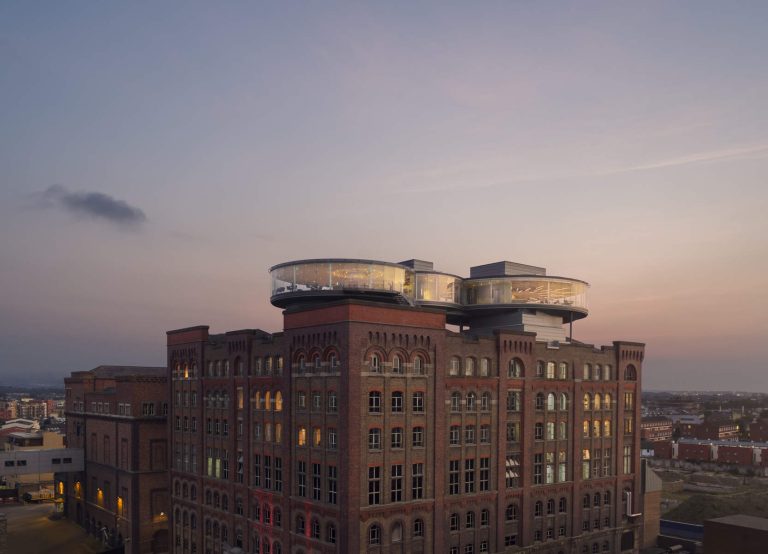
The Macallan Estate in Speyside is the gold standard for corporate distillery experiences. The estate’s visitor centre — a sculptural, underground structure set into the landscape — is a destination in its own right. Corporate groups access the Six Pillars Masterclass, a deep exploration of the six factors The Macallan credits for its flavour: the spirit, natural colour, the curiously small stills, sherry oak casks, the estate, and the mastery of the wood. For groups prioritising prestige and exclusivity, The Macallan delivers. It pairs with a broader Scottish Highlands retreat programme.
Glenfiddich in Dufftown offers the Malt Master Blending experience, where groups work with components drawn from the distillery’s solera vat — a process borrowed from sherry production — to create a custom blend. For groups of 40-80, Glenfiddich can run parallel sessions, with half the group on the production tour while the other half blends.
Talisker on the Isle of Skye brings a dramatic setting to the experience. The “Made by the Sea” tour takes groups through the distillery’s maritime-influenced production process, with tastings held overlooking Loch Harport. Talisker suits groups of 15-30 and integrates into a wider Scottish Highlands itinerary that includes Skye’s Cuillin Mountains and the Old Man of Storr.
A Scottish distillery corporate booking is a curated, guide-led programme with dedicated tasting sessions, priority access to restricted areas like bonded warehouses, and the option for private dining in estate facilities. It is not the standard visitor tour with a corporate label attached.
| Scotland Region | Key Distillery | Access from Edinburgh | Best Combined With |
|---|---|---|---|
| Speyside | The Macallan, Glenfiddich | 3-3.5 hours by coach | Scottish Highlands retreat, castle venues |
| Islay | Lagavulin | Flight to Islay (45 min) or ferry from Kennacraig (2h) | Multi-distillery island tour (2-3 days) |
| Isle of Skye | Talisker | 5-6 hours by coach (via Skye Bridge) | Highland scenery, outdoor team activities |
| Lowlands | Glenkinchie | 45 minutes by coach | Edinburgh city programme, day trip format |
Lagavulin on Islay is for groups with serious whisky interest. The Peat-to-Glass experience traces the journey from peat bog to bottle, and the warehouse tasting — sampling directly from the cask in a centuries-old stone warehouse — is one of the most atmospheric corporate experiences in the UK. Islay requires a flight or ferry, making it best suited to itineraries of 4+ days with dedicated island time.
Glenkinchie is the strategic choice for groups based in Edinburgh. Located 45 minutes from the city centre in East Lothian’s rolling farmland, it offers a Lowland malt experience that contrasts sharply with the peaty intensity of Islay or the rich sweetness of Speyside. Glenkinchie works perfectly as a half-day excursion from Edinburgh, returning the group to the city for an evening programme.
Private Blending Experiences and Cask Programs
If the distillery tour is the education, the blending workshop is the team building. Private blending sessions put your group into the role of master blender, working with component spirits to create something original — and every bottle goes home as a tangible reminder of the experience.
According to Glenfiddich Distillery, their corporate blending programmes have a 94% satisfaction rating among group participants, with the collaborative nature of the exercise cited as the most valued element. According to the Scotch Whisky Association, blending workshops are the fastest-growing segment of distillery corporate offerings, with a 30% year-over-year increase in bookings since 2023. According to Jameson Distillery Midleton, their Blender’s Bench experience allows groups to work with up to eight different whiskey components, including rare single pot still and grain expressions not available to the public.
| Blending Experience | Distillery | Group Size | What’s Included | Approx. Cost (per person) |
|---|---|---|---|---|
| Blender’s Bench | Jameson Midleton | 15-60 | 8 components, nosing training, bottle with custom label | EUR 75-120 |
| Malt Master Experience | Glenfiddich | 10-40 | Solera vat components, masterclass, engraved bottle | GBP 85-150 |
| Six Pillars Masterclass | The Macallan | 10-50 | Sherry oak cask components, sensory analysis, bottle | GBP 120-200 |
| Teeling Blending Room | Teeling Dublin | 15-40 | Grain, malt, and pot still components, custom blend bottle | EUR 65-95 |
| Triple-Blend Workshop | Tullamore DEW | 15-50 | Triple-distilled components, team challenge format, bottle | EUR 55-85 |
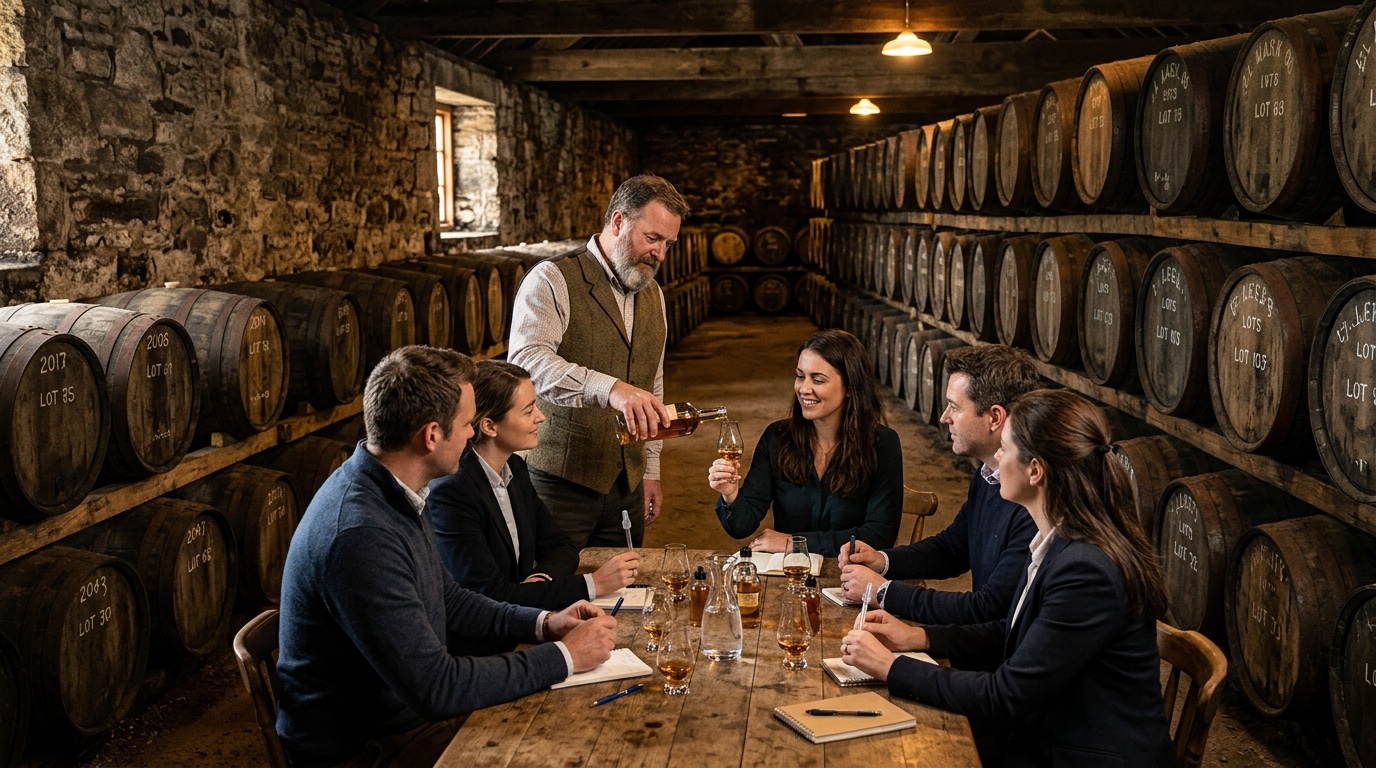
A private blending experience is a structured, facilitated workshop where a professional blender guides your team through the science and art of whiskey creation — with the output being a personalised bottle that reflects the group’s collective decisions. It is not a free-pour exercise where participants mix spirits randomly; the process teaches palate calibration, nosing technique, and the principles of flavour balance.
Cask selection programs take the concept further. Several distilleries offer corporate groups the opportunity to purchase an entire cask — a commitment of GBP 3,000 to GBP 50,000+ depending on the spirit, age, and distillery prestige. The cask matures in the distillery’s warehouse, and the owning company receives annual samples, a commemorative plaque, and eventual bottling rights.
| Cask Program | Distillery | Cask Types Available | Typical Investment | Maturation Period | Bottling Output |
|---|---|---|---|---|---|
| Cask Ownership Programme | The Macallan | Sherry oak, bourbon oak | GBP 15,000-50,000+ | Minimum 3 years | 200-300 bottles |
| Fill Your Own Cask | Dingle Distillery | Bourbon barrel, sherry butt | EUR 3,000-8,000 | 3-5 years | 150-250 bottles |
| Corporate Cask Club | Glenfiddich | American oak, European oak, custom finishes | GBP 8,000-25,000 | 3-10 years | 200-350 bottles |
| Heritage Cask | Kilbeggan | Ex-bourbon, ex-wine | EUR 3,500-6,000 | 3-7 years | 180-280 bottles |
A cask purchase is a long-term brand asset that produces hundreds of bottles of bespoke, single-cask spirit bearing your company’s name — ideal for client gifts, milestone celebrations, and executive recognition. It is not a short-term event purchase; it requires patience and a willingness to wait for the spirit to mature.
For companies seeking a memorable team-building format, the blending workshop doubles as a collaborative problem-solving exercise. Teams of 4-6 work together to balance flavour profiles, present their blends to the group, and compete for the “best blend” as judged by the distillery’s master blender. This format works particularly well as an afternoon activity before a corporate group dinner or as a standalone team-building event. Pair with a CSR activity or a visit to the surrounding region — Galway for Midleton-based groups, or the Scottish Highlands for Speyside-based groups — and the blending session becomes the centrepiece of a full-day programme.
Food Pairing Dinners and Tasting Events
Pairing whiskey with food elevates a tasting from a drinks reception to a structured culinary experience. The flavour complexity of both Irish whiskey and Scotch whisky creates pairing opportunities that rival wine — and for corporate groups, the format lends itself to seated, conversational dining that builds relationships.
According to the Irish Food Board (Bord Bia), food and whiskey pairing events have grown 40% in the Irish hospitality sector since 2022, driven by demand from corporate and incentive groups. According to the Scotch Whisky Experience in Edinburgh, their corporate pairing dinners — held in the venue’s 3,400-bottle whisky collection gallery — are fully booked 4-5 months in advance during peak season. According to Failte Ireland, culinary experiences are the top-rated element of corporate group visits by post-trip survey respondents.
| Pairing Style | Whiskey/Whisky Type | Food Pairing | Why It Works |
|---|---|---|---|
| Classic Irish | Jameson Original (blended) | Smoked Irish salmon, brown soda bread | Honey and vanilla notes complement smoke and salt |
| Single Pot Still | Redbreast 12 | Aged Irish farmhouse cheddar, oat cakes | Spicy, creamy spirit matches rich, tangy cheese |
| Speyside Malt | Glenfiddich 18 | Pan-seared Scottish venison, bramble jus | Fruit and oak balance gamey richness |
| Islay Peat | Lagavulin 16 | Chargrilled oysters, seaweed butter | Maritime smoke mirrors coastal shellfish |
| Dessert | Tullamore DEW 18 Single Malt | Dark chocolate torte, whiskey caramel | Dried fruit and toffee notes amplify cocoa depth |
A whiskey pairing dinner is a curated multi-course experience where each dish is designed to interact with a specific expression — amplifying flavours in both the food and the spirit through complementary or contrasting profiles. It is not a standard dinner with whiskey poured alongside; the pairing must be intentional and guided.
Several venues offer exclusive-use private dining with integrated whiskey or whisky tastings:
| Venue | Location | Dining Capacity (private) | Pairing Format | Advance Booking |
|---|---|---|---|---|
| Midleton Distillery — The Still House | Cork, Ireland | 60 | 5-course dinner with Midleton range pairings | 4-6 months |
| Scotch Whisky Experience | Edinburgh, Scotland | 100 | 4-course dinner in the collection gallery | 4-5 months |
| The Macallan Estate Bar | Speyside, Scotland | 40 | Tasting menu with sherry cask aged expressions | 6-9 months |
| Teeling Distillery — The Bang Bang Bar | Dublin, Ireland | 50 | Canape reception + 4-expression guided tasting | 3-4 months |
| Dingle Distillery Kitchen | Dingle, Co. Kerry | 25 | Seasonal Kerry produce with whiskey and gin pairings | 3-5 months |
For groups staying in Edinburgh, the Scotch Whisky Experience on the Royal Mile is a venue that combines education and entertainment — the world’s largest collection of Scotch whisky provides the backdrop for a tasting dinner that walks your group through Scotland’s five whisky regions. For those visiting Dublin, Teeling’s Bang Bang Bar offers a more intimate, urban setting. Groups on the Wild Atlantic Way or Dingle Peninsula can combine a Dingle Distillery visit with a seafood pairing dinner featuring Kerry’s celebrated local produce.
The pairing dinner format also integrates well into broader incentive travel programmes as a highlight evening, and our autumn incentive travel guide covers how harvest-season produce enhances these culinary experiences.
Gin as an Alternative: The Craft Spirits Boom
Not every member of your group will be a whiskey drinker — and the craft gin boom across the UK and Ireland means distillery experiences extend well beyond brown spirits. Gin is now the fastest-growing premium spirits category in both countries, and many whiskey distilleries produce gin alongside their core products.
According to the Wine and Spirit Trade Association (WSTA), UK gin sales exceeded GBP 3 billion in 2025, with craft and premium brands accounting for over 60% of the market. According to Drinks Ireland (IBEC), Irish gin producers have grown from fewer than 10 in 2015 to over 80 in 2025, making gin one of the most dynamic segments of Ireland’s spirits industry. According to VisitScotland, gin distillery visits in Scotland increased 25% year-over-year in 2025, with many visitors combining whisky and gin experiences on the same trip.
| Gin Distillery | Location | Max Group Size | Signature Experience | Whiskey/Whisky Also Produced? |
|---|---|---|---|---|
| Dingle Distillery (Dingle Gin) | Dingle, Co. Kerry, Ireland | 30 | Botanical garden tour + Gin School (make your own) | Yes — Dingle Single Malt |
| Hendrick’s Gin Palace | Girvan, Ayrshire, Scotland | 40 | Gin Palace tour + botanical laboratory workshop | No (Grant’s whisky produced at separate facility) |
| Silent Pool Distillers | Surrey, England | 40 | Estate tour + Gin blending masterclass | No (gin and vodka only) |
| Edinburgh Gin | Edinburgh, Scotland | 30 | Gin distillery tour + Make Your Own Gin | No |
| Teeling / Dublin Liberties (gin range) | Dublin, Ireland | 60 | Combined whiskey and gin tasting | Yes — Teeling Whiskey |
Gin is a genuinely booming spirits category that appeals to participants who find whiskey too intense, prefer botanical complexity over barrel-aged depth, or simply want variety within a distillery-themed itinerary. It is not a secondary afterthought — many dedicated gin experiences rival whiskey tours in depth and quality.
Hendrick’s Gin Palace in Girvan, Scotland, is among the most visually striking distillery experiences in the UK. The purpose-built Gin Palace — a Victorian-inspired facility with a botanical greenhouse, custom copper stills, and an eccentric design philosophy — hosts corporate groups for immersive workshops. Participants explore the distillery’s use of rose and cucumber as signature botanicals, then create their own botanical blend in the laboratory.
Silent Pool Distillers in Surrey sits on the Duke of Northumberland’s Albury Estate, 40 minutes from London. For groups incorporating a London corporate programme, Silent Pool offers a countryside counterpoint — a craft gin distillery set beside a spring-fed lake, with botanical foraging walks and blending masterclasses for groups of up to 40.
| Programming Approach | Format | Who It Suits | Itinerary Integration |
|---|---|---|---|
| Dual spirit tour | Combined whiskey + gin tasting at a distillery that produces both (e.g., Dingle, Teeling) | Mixed groups with varied preferences | Single venue, 2-3 hours |
| Split session | Half the group at a whiskey distillery, half at a gin distillery — then swap | Large groups (60+) needing parallel programming | Two venues, same afternoon |
| Gin as evening activity | Gin masterclass at a city-centre venue (Edinburgh Gin, Teeling) as pre-dinner programme | Groups with a whiskey visit already booked for daytime | Evening, 1.5-2 hours |
For groups visiting the Dingle Peninsula, Dingle Distillery produces both its acclaimed single malt whiskey and Dingle Gin — meaning a single venue visit covers both spirits with one seamless experience. Teeling in Dublin also offers combined whiskey and gin tastings. This dual-spirit approach ensures every palate in the group is engaged.
Our sustainable corporate travel guide covers how craft distilleries are increasingly adopting sustainable production methods — from botanical sourcing to packaging — which can align your group experience with corporate ESG reporting requirements.
Group Logistics: Transport, Capacity, and Responsible Drinking
Planning a distillery visit for a corporate group requires more than selecting the right venue — it demands logistical coordination around transport, capacity constraints, scheduling, and a clear framework for responsible alcohol consumption.
According to Drinkaware UK, corporate hospitality events that include structured moderation guidance report 73% fewer alcohol-related incidents than unstructured events. According to the Road Safety Authority Ireland (RSA), Ireland operates a strict 50mg/100ml blood alcohol limit for drivers — lower than many US states — which makes dedicated group transport essential for any distillery visit. According to the Scotch Whisky Association, all SWA member distilleries provide designated driver alternatives and non-alcoholic options as standard practice for group visits.
| Logistical Element | Key Consideration | DMC Solution |
|---|---|---|
| Transport to rural distilleries | Many distilleries are 1-3 hours from major cities on narrow roads | Pre-booked executive coach with experienced rural driver; midi-coach for groups under 33 |
| Staggered arrival scheduling | Distilleries cannot process 80+ guests simultaneously at all points of the tour | Split groups into cohorts of 25-40; rotate tour, blending, and tasting sessions |
| Non-drinking participants | 10-20% of US corporate groups include non-drinkers (cultural, health, religious reasons) | Pre-confirm numbers; arrange non-alcoholic tasting flights and equal-quality alternatives |
| Return transport timing | Allow 60-90 minutes after last tasting before departure for effect dissipation | Schedule a post-tasting coffee and dessert reception at the distillery or nearby venue |
| Evening programme after distillery | Groups may continue to evening dinner or event after the visit | Coordinate dinner venue with lighter drinks list; water service emphasis |
A responsible drinking policy for a corporate distillery visit is a documented framework — shared with participants before the trip — that sets expectations around consumption quantities, provides clear non-alcoholic alternatives, and ensures professional transport for the entire group. It is not a blanket prohibition or a vague “drink responsibly” instruction; it requires specific, actionable guidance.
| Responsible Drinking Measure | Implementation | Responsible Party |
|---|---|---|
| Pre-trip communication | Include responsible drinking policy in trip pack; state tasting volumes (typically 15-25ml per sample, 4-6 samples total = equivalent of 1-2 standard drinks) | Corporate travel manager |
| Guided tasting moderation | Distillery guide controls pour sizes; spit buckets available at all stations; water provided between tastings | Distillery staff |
| Non-alcoholic experience parity | Non-drinking guests receive equal tour access, non-alcoholic tasting flight, and identical branded takeaway | DMC + Distillery |
| Post-tasting buffer | 60-90 minute period with food, coffee, and non-alcoholic drinks before transport departs | DMC on-site coordinator |
| Dedicated transport | All group members travel by coach — no self-driving to or from distillery venues | DMC transport team |
Self-driving to a distillery is a risk that a well-managed corporate programme eliminates entirely — dedicated coach transport means nobody faces the question of whether they are safe to drive. It is not an optional convenience; it is a duty-of-care requirement for any corporate group that includes alcohol consumption in its programme.
On transport logistics, our group travel logistics guide covers coach types, capacity, and routing in detail. For distillery visits in remote areas — Speyside, Islay, the Dingle Peninsula, the Scottish Highlands — a 33-seat midi-coach is often the maximum practical size on narrow rural roads. Groups of 50+ heading to these locations need two vehicles and a DMC coordinator on each.
For itineraries that combine distillery visits with other experiences, plan the distillery component for the afternoon rather than morning, allowing the rest of the day’s programme to run before any alcohol is consumed. A morning of team building or outdoor activities followed by an afternoon distillery visit and evening pairing dinner creates a natural flow that maximises both productivity and enjoyment. Our incentive travel budget planning guide includes template costings for distillery programmes, and the DMC vs DIY analysis explains why professional coordination is particularly important for experiences involving alcohol.
Frequently Asked Questions
How many people can join a private whiskey distillery tour in Ireland or Scotland?
Capacities vary by venue. Smaller craft distilleries like Dingle and Talisker accommodate 15-30 guests per private session. Mid-size operations like Teeling and Glenkinchie handle 30-50. Larger facilities including Jameson Midleton, The Macallan, and Glenfiddich can host 50-120 guests with multiple guide teams running parallel tours. For groups over 60, a DMC typically arranges a staggered programme where half the group tours while the other half participates in a blending workshop, then the groups rotate. This ensures every participant gets an intimate experience regardless of total group size.
What is the difference between Irish whiskey and Scotch whisky?
The differences span spelling, production, and flavour. Irish whiskey is spelled with an “e” and is typically triple-distilled using unpeated malted barley, producing a smoother, lighter spirit. Scotch whisky drops the “e” and is usually double-distilled, often using peated malt, which creates smokier, more complex flavour profiles. Irish whiskey must age for a minimum of three years in wooden casks on the island of Ireland, while Scotch must age for at least three years in oak casks in Scotland. Both carry protected geographical designations under law — neither can be produced anywhere else and carry that name.
Can corporate groups create their own whiskey blend at a distillery?
Yes. Several distilleries offer private blending workshops designed specifically for corporate groups. Jameson Midleton, Teeling, Tullamore DEW, Glenfiddich, and The Macallan all run blending experiences where participants select from single malts, grain whiskies, and aged cask components to create a custom blend. Groups typically bottle their creations with personalised labels featuring company logos or event branding. Sessions run 60-90 minutes and work well for groups of 15-50 — the format naturally lends itself to team-based competition where sub-groups create competing blends judged by the distillery’s master blender.
Are there non-alcoholic alternatives for group members who do not drink?
Every reputable distillery offers non-alcoholic participation options. Non-drinking guests receive the same tour and production education, with tasting flights replaced by artisan soft drinks, speciality teas, or non-alcoholic spirit alternatives. Some distilleries, including Teeling and Dingle, provide dedicated non-alcoholic tasting notes that explain the flavour profiles guests would encounter without requiring consumption. A DMC confirms non-drinking numbers in advance and ensures the distillery adjusts the experience so that non-drinking participants feel equally included — never sidelined or singled out.
How far in advance should we book a private distillery experience for a corporate group?
Book 3-6 months in advance for groups of 20 or more. Premium experiences like The Macallan Estate Tour or Midleton Very Rare tasting require 6-9 months of lead time, particularly during peak season from May through September. Smaller craft distilleries have limited private booking slots and may require 4-6 months notice even for groups of 15-20. A DMC with established distillery relationships can often secure priority access and negotiate exclusive-use windows that are not available through the distillery’s public booking system — this is one of the clearest advantages of working with a specialist DMC.
Ready to build a distillery programme for your group? Contact Cashel Travel to start planning. As a specialist DMC for the UK and Ireland, we coordinate every element — from private distillery bookings and blending workshops to coach transport, food pairing dinners, and responsible drinking frameworks — so your group gets an exceptional spirits experience without the logistical complexity.