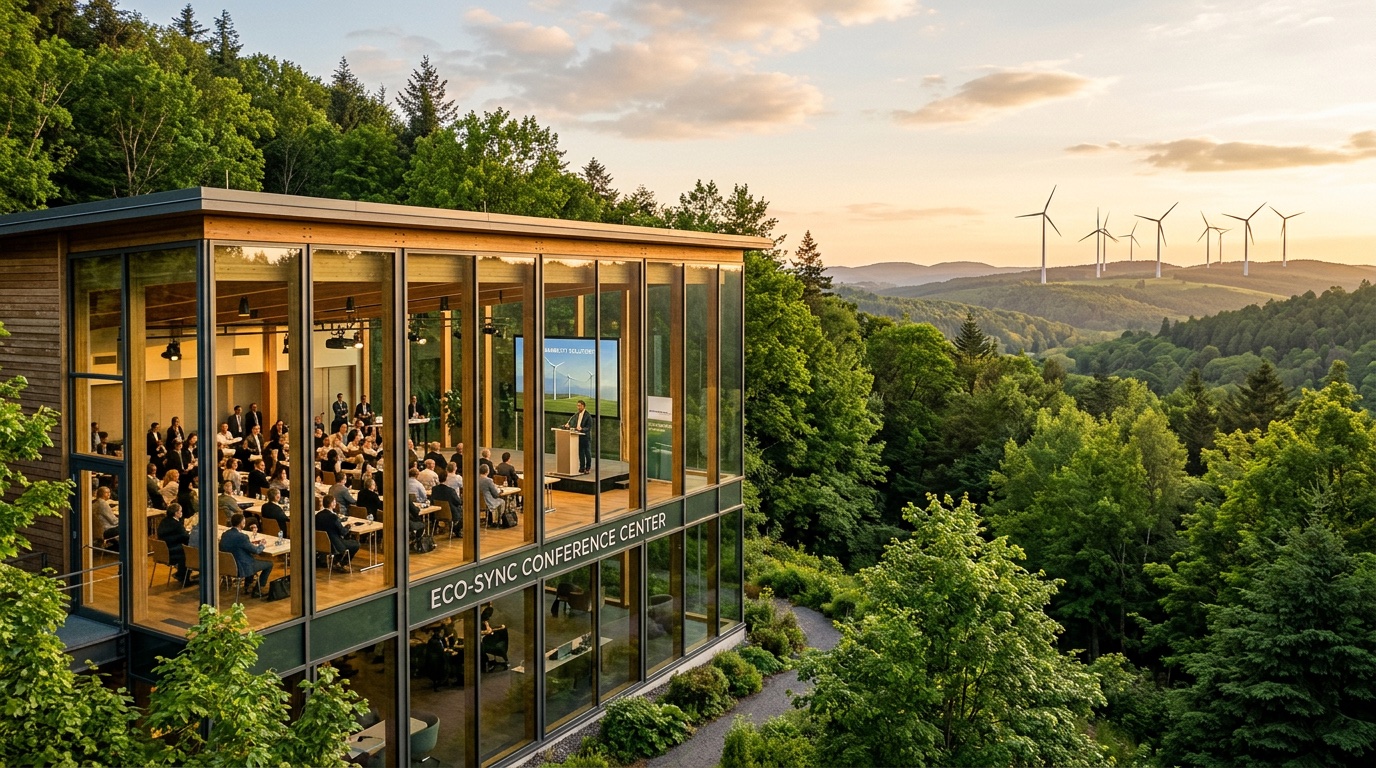
Carbon-Neutral Events: Corporate Planning Guide
Carbon-neutral corporate events balance measured greenhouse gas emissions with verified offsets and real reduction strategies. For US companies planning group events, conferences, or incentive trips in the UK and Ireland, achieving carbon neutrality requires structured measurement, supplier coordination, and credible offset procurement. This guide covers the frameworks, tactics, and venues that make it work.
Table of Contents
- Carbon Neutral vs Net Zero: What Event Planners Need to Know
- Mapping Your Event’s Carbon Footprint
- Measurement Frameworks: PAS 2060 and ISO 14064
- Reduction First: Cutting Emissions Before You Offset
- Credible Offset Programs for Corporate Events
- Sustainable Venues in the UK and Ireland
- Reporting, Checklists, and ESG Compliance
Carbon Neutral vs Net Zero: What Event Planners Need to Know
The terms carbon neutral and net zero are often used interchangeably in event marketing. They mean different things, and the distinction matters for compliance and credibility.
Carbon neutral is a state where an event’s total measured greenhouse gas emissions are balanced by an equivalent amount of verified carbon offsets. It is not the same as reducing emissions to zero. According to the British Standards Institution (BSI), PAS 2060 is the internationally recognized specification for demonstrating carbon neutrality, and it explicitly permits offsetting as the balancing mechanism.
Net zero is a commitment to reduce absolute emissions by at least 90% against a science-based baseline before using offsets for residual emissions only. It is not achievable through offsetting alone. According to the Science Based Targets initiative (SBTi), net-zero claims require long-term decarbonization, not short-term compensation.
| Attribute | Carbon Neutral (PAS 2060) | Net Zero (SBTi Standard) |
|---|---|---|
| Emissions reduction required | No minimum threshold | 90%+ absolute reduction |
| Offsets permitted | Yes, for full balance | Only for residual 5-10% |
| Verification standard | PAS 2060 | SBTi Net-Zero Standard |
| Typical timeline | Achievable per-event | Long-term corporate target |
| Cost impact (200-person event) | 2-5% of budget | 15-30% of budget |
For most US companies organizing group events in the UK and Ireland, carbon neutrality is the practical starting point. It delivers a defensible sustainability claim, satisfies most ESG reporting frameworks, and can be achieved within a single event cycle. Net zero is the long-term destination — carbon neutral is the credible first step.
According to the Events Industry Council, over 60% of corporate event buyers now require sustainability commitments from suppliers, making carbon-neutral planning a competitive requirement rather than a discretionary add-on.
Mapping Your Event’s Carbon Footprint
Before you reduce or offset anything, you need a complete emissions inventory. According to ISO 14064-1:2018, greenhouse gas quantification should categorize emissions into three scopes to ensure nothing is missed.
For corporate events, the emission sources break down into predictable categories. Attendee travel is the dominant contributor to any international event’s carbon footprint, typically representing 60-80% of total emissions. Attendee travel is not something you can ignore or estimate loosely — flight routing, cabin class, and ground transport all affect the calculation significantly.
| Emission Source | Typical % of Total | Scope (ISO 14064) | Primary Data Required |
|---|---|---|---|
| Attendee flights (transatlantic) | 50-70% | Scope 3 | Origin/destination, cabin class, airline |
| Ground transport (transfers, taxis) | 5-10% | Scope 3 | Distance, vehicle type, occupancy |
| Venue energy (HVAC, lighting, AV) | 10-15% | Scope 2 | kWh consumption, grid carbon intensity |
| Accommodation | 5-10% | Scope 3 | Room-nights, hotel certification |
| Catering and F&B | 5-10% | Scope 3 | Menu composition, sourcing distance |
| Printed materials and freight | 2-5% | Scope 3 | Weight, material type, shipping mode |
| Exhibition builds and AV equipment | 2-5% | Scope 3 | Materials weight, reuse percentage |
A single round-trip economy flight from New York JFK to London Heathrow generates approximately 1.6 tonnes of CO2 per passenger. For a 200-person corporate conference, that translates to roughly 320 tonnes of CO2 from air travel alone. Business class increases this by a factor of approximately 2.5x due to larger seat footprints.
According to MeetGreen, accurate carbon accounting requires primary data collection — not industry averages — for at least the top three emission sources. This means collecting actual flight booking data, real venue energy bills, and specific catering menus rather than relying on per-capita benchmarks.
Cashel Travel works with event planners to build emissions inventories from registration data onward. Our sustainability program integrates carbon calculation into the event planning process from the initial scoping stage.
Measurement Frameworks: PAS 2060 and ISO 14064
Choosing the right measurement framework determines whether your carbon-neutral claim is defensible or vulnerable to greenwashing accusations. Two frameworks dominate the corporate events space: PAS 2060 and ISO 14064.
PAS 2060 is a specification that defines the requirements for achieving and demonstrating carbon neutrality for any defined subject — including a single event. It is not a certification that can be self-declared without independent verification. According to the BSI, PAS 2060 requires a qualifying explanatory statement (QES) and a carbon footprint report verified by a third party.
ISO 14064 is a three-part international standard for quantifying, monitoring, reporting, and verifying greenhouse gas emissions. It is not limited to carbon neutrality — it covers the full GHG inventory process. According to ISO, Part 1 covers organizational-level quantification, while Part 3 covers project-level verification, making it applicable to individual events.
| Framework | Purpose | Verification | Event Applicability | Cost (Typical Event) |
|---|---|---|---|---|
| PAS 2060 | Carbon neutrality demonstration | Third-party QES review | Single event or event series | $3,000-$8,000 |
| ISO 14064-1 | GHG inventory quantification | Accredited verification body | Organization or event | $5,000-$15,000 |
| ISO 20121 | Sustainable event management system | Certification body audit | Event management process | $10,000-$25,000 |
| GHG Protocol Corporate Standard | Corporate emissions accounting | Optional third-party | Parent organization level | Varies |
For US companies organizing incentive trips and corporate retreats in the UK and Ireland, PAS 2060 is the most practical per-event framework. It provides a structured four-step process: measure the footprint, reduce where possible, offset the remainder, and document the claim with a qualifying explanatory statement.
According to the Events Industry Council, venues holding ISO 20121 (sustainable event management) certification simplify the compliance process because their energy data, waste metrics, and supply chain documentation are already audit-ready. Several UK and Ireland conference venues now maintain both ISO 14001 and ISO 20121 certifications.
The Net Zero Carbon Events initiative, backed by the Joint Meetings Industry Council, provides a free roadmap for event organizers who want to move beyond carbon neutrality toward full net-zero commitments over time.
Reduction First: Cutting Emissions Before You Offset
Credible carbon-neutral claims require a “reduce then offset” hierarchy. Purchasing offsets without first minimizing emissions is called “offsetting without abatement” — and it undermines the integrity of the claim under PAS 2060. According to MeetGreen, reduction should target the three largest emission sources before any offset procurement begins.
Emission reduction is the process of eliminating or minimizing greenhouse gas emissions at their source through operational changes, technology, and supplier selection. It is not the same as offsetting, and credible frameworks like PAS 2060 require documented reduction efforts as a prerequisite.
| Reduction Strategy | Emission Source Targeted | Typical Reduction | Implementation Complexity |
|---|---|---|---|
| Select direct-route flights only | Attendee travel | 10-20% | Low |
| Negotiate SAF (Sustainable Aviation Fuel) uplift | Attendee travel | Up to 80% per unit | Medium |
| Electric/hybrid group transfers | Ground transport | 40-60% | Low |
| Venue with 100% renewable energy | Venue operations | 80-100% (Scope 2) | Low (venue selection) |
| Plant-forward menus (50%+ plant-based) | Catering | 30-50% | Low |
| Digital event materials (no print) | Materials and freight | 80-95% | Low |
| Local sourcing within 50-mile radius | Catering, materials | 15-30% | Medium |
| Reusable exhibition builds | Exhibition and AV | 50-70% | Medium |
For group travel to Ireland, one of the highest-impact reductions is selecting venues accessible from major airports without domestic connecting flights. Dublin, Shannon, and Cork airports all offer direct transatlantic service, eliminating the carbon cost of secondary flights that add 200-400 kg CO2 per passenger.
Catering is the most controllable emission source on-site. According to the Events Industry Council Centre for Sustainability, replacing 50% of meat-based menu items with plant-based alternatives reduces catering emissions by 30-50% without significantly affecting attendee satisfaction when executed by experienced chefs. Many UK and Ireland venues now offer dedicated plant-forward menus featuring local produce.
Cashel Travel’s sustainability approach prioritizes reduction at the sourcing stage. We negotiate electric coach transfers, connect planners with renewable-powered venues, and design itineraries that minimize unnecessary ground travel between activities.
Credible Offset Programs for Corporate Events
After maximizing reductions, offsets close the gap to carbon neutrality. Not all offset programs carry equal credibility — and the wrong choice can expose your organization to greenwashing risk that damages the ESG claim you set out to make.
Carbon offsets are verified, quantified reductions in greenhouse gas emissions from a specific project that can be purchased to compensate for emissions produced elsewhere. Offsets are not a substitute for emission reductions, and PAS 2060 requires documented evidence that reduction efforts precede offset procurement.
According to the BSI PAS 2060 specification, offsets used for carbon-neutral claims must come from projects verified under recognized international standards and must represent real, measurable, permanent, and additional emission reductions.
| Offset Program | Certification Body | Project Types | Co-Benefits | Price per Tonne CO2e (2025-26) |
|---|---|---|---|---|
| Gold Standard (GS VERs) | Gold Standard Foundation | Renewables, cookstoves, water | SDG alignment required | $15-$50 |
| Verified Carbon Standard (VCUs) | Verra | Forestry, REDD+, renewables, methane | CCB and SD VISta add-ons | $8-$30 |
| Peatland Code | IUCN UK Peatland Programme | UK peatland restoration | Biodiversity, water quality | $20-$40 |
| Woodland Carbon Code | Scottish Forestry / Forestry Commission | UK native woodland creation | Biodiversity, landscape | $15-$35 |
| American Carbon Registry (ACR) | Winrock International | Forestry, soil carbon, industrial | US-based projects available | $10-$25 |
For US companies holding corporate events in the UK and Ireland, domestic offset programs like the UK Peatland Code and Woodland Carbon Code offer a compelling narrative. According to IUCN UK, UK peatlands store approximately 3.2 billion tonnes of carbon, and restoration projects deliver biodiversity and water-quality co-benefits that resonate in ESG reporting.
Gold Standard remains the benchmark for international offset credibility. It requires all projects to demonstrate contribution to at least three UN Sustainable Development Goals beyond climate action, making it the strongest choice for CSR managers who need to defend offset quality to boards and investors.
Cashel Travel partners with verified offset providers and can integrate offset procurement into your event package, ensuring credits are retired against your specific event and documented for ESG reporting purposes.
Sustainable Venues in the UK and Ireland
Venue selection is the single decision that most affects your event’s baseline carbon footprint. A venue powered by 100% renewable energy with ISO 14001 certification can eliminate Scope 2 emissions entirely, while a venue reliant on gas heating and grid electricity adds significant overhead that must be offset.
A sustainable venue is a facility that actively measures, reduces, and reports its environmental impact through certified management systems and renewable energy procurement. It is not simply a venue that recycles or has a green page on its website — credible sustainability requires third-party verification.
| Venue | Location | Certifications | Renewable Energy | Capacity |
|---|---|---|---|---|
| ICC Belfast | Belfast, Northern Ireland | ISO 14001, ISO 20121 | 100% renewable electricity | Up to 2,000 |
| SEC (Scottish Event Campus) | Glasgow, Scotland | ISO 20121, Green Tourism Gold | 100% renewable electricity | Up to 3,000 |
| Convention Centre Dublin (CCD) | Dublin, Ireland | ISO 20121, ISO 14001 | 100% renewable electricity | Up to 2,000 |
| ExCeL London | London, England | ISO 20121, ISO 14001 | Renewable electricity tariff | Up to 10,000 |
| Edinburgh International Conference Centre | Edinburgh, Scotland | ISO 20121, Green Tourism Gold | 100% renewable electricity | Up to 1,200 |
| Killarney Convention Centre | Kerry, Ireland | Green Hospitality certification | Partial renewable | Up to 1,000 |
According to the Events Industry Council, venues with ISO 20121 certification reduce pre-event carbon accounting workload by 40-60% because their energy consumption data, waste diversion rates, and supply chain sustainability documentation are already standardized and audit-ready.
For smaller corporate retreats and incentive travel programs in rural Ireland and Scotland, country estates and boutique hotels increasingly invest in on-site renewables. Properties such as Ashford Castle (Co. Mayo) and Gleneagles (Perthshire) have implemented energy management programs that include biomass heating, solar thermal systems, and locally sourced food programs.
Ireland’s national grid is also increasingly green — according to EirGrid, renewable sources generated over 40% of Ireland’s electricity in 2025, with a government target of 80% by 2030. This means the carbon intensity of venue electricity in Ireland is declining year-on-year, reducing the offset burden for event planners. Cashel Travel maintains a vetted venue database filtered by sustainability credentials and can match your event requirements to certified properties across the UK and Ireland.
Reporting, Checklists, and ESG Compliance
Carbon-neutral event claims require documentation that can withstand scrutiny from auditors, investors, and stakeholders reviewing your ESG disclosures. A well-structured reporting pack turns your sustainability efforts into a reusable corporate asset rather than a one-time marketing statement.
ESG-compliant event reporting is a documented record of emissions measurement, reduction actions, and offset retirement that aligns with recognized frameworks such as PAS 2060, GRI Standards, or CDP disclosures. It is not a summary paragraph in a post-event report — it requires structured data, verification evidence, and a qualifying explanatory statement.
According to PAS 2060, the qualifying explanatory statement (QES) must include: the entity making the claim, the subject of the claim (the specific event), the carbon footprint methodology, the reduction actions taken, the type and source of offsets, and the declaration period.
| Reporting Element | Required by PAS 2060 | Required by GRI 305 | Recommended for ESG Pack |
|---|---|---|---|
| Carbon footprint total (tCO2e) | Yes | Yes | Yes |
| Emissions by scope (1, 2, 3) | Yes | Yes | Yes |
| Reduction actions and % impact | Yes | No | Yes |
| Offset credits — type, registry, serial numbers | Yes | No | Yes |
| Third-party verification statement | Yes | Recommended | Yes |
| Year-on-year comparison | No | Recommended | Yes |
| Attendee engagement metrics | No | No | Yes |
Event Planner Carbon-Neutral Checklist:
- [ ] Define event boundary and emission sources (12+ months before event)
- [ ] Select measurement framework (PAS 2060 or ISO 14064)
- [ ] Choose venue with ISO 20121 or ISO 14001 certification
- [ ] Collect primary data: flight bookings, venue energy data, menu plans
- [ ] Calculate baseline footprint using accredited calculator
- [ ] Implement reduction strategies: direct flights, electric transfers, plant-forward menus
- [ ] Procure verified offsets (Gold Standard or Verra VCS) for residual emissions
- [ ] Retire offset credits in public registry against named event
- [ ] Draft qualifying explanatory statement (PAS 2060 QES)
- [ ] Compile ESG reporting pack with verification evidence
- [ ] Communicate results to attendees and stakeholders post-event
According to MeetGreen, organizations that maintain carbon-neutral event documentation across multiple events can demonstrate year-on-year reduction trajectories — a key metric for CDP disclosures and investor ESG questionnaires. This turns each corporate event into a data point that strengthens your broader sustainability narrative.
Cashel Travel provides post-event carbon reporting as part of our sustainability services, giving your team audit-ready documentation that integrates directly into corporate ESG frameworks.
Frequently Asked Questions
What is the difference between a carbon-neutral event and a net-zero event?
A carbon-neutral event balances total greenhouse gas emissions by purchasing verified offsets equal to the event’s measured carbon footprint. Under PAS 2060, carbon neutrality is achieved per-event through a combination of reduction and offsetting. A net-zero event requires actual emissions reductions of at least 90% against a science-based baseline, with offsets permitted only for the residual percentage. For most US companies organizing group events in the UK and Ireland, carbon neutrality through PAS 2060 is the practical starting point, with net-zero as a long-term target aligned to the Science Based Targets initiative.
How much does it cost to make a corporate event carbon neutral?
Carbon-neutral certification typically adds 2-5% to total event budget. For a 200-person conference in the UK or Ireland with transatlantic attendees, expect $8,000-$25,000 covering measurement ($3,000-$8,000 for third-party verification), reduction implementation (varies by strategy), and offset procurement ($8-$50 per tonne depending on standard). The largest cost variable is attendee travel volume. Working with a DMC like Cashel Travel that has pre-vetted sustainable suppliers reduces both the emissions footprint and the management overhead.
Which offset programs are considered credible for corporate events?
Gold Standard and Verified Carbon Standard (Verra VCS) are the two most widely recognized programs that satisfy PAS 2060 requirements. Gold Standard requires projects to deliver measurable Sustainable Development Goal co-benefits beyond climate action. For events held in the UK and Ireland, the Peatland Code and Woodland Carbon Code offer domestic offset options with local biodiversity co-benefits. Avoid offsets from unverified or voluntary-only registries that lack third-party additionality testing, as these may not withstand ESG audit scrutiny.
What are the biggest sources of carbon emissions at corporate events?
Attendee travel dominates, accounting for 60-80% of total event carbon footprint for international events. A single round-trip economy flight from New York to London generates approximately 1.6 tonnes of CO2 per passenger — business class roughly 2.5x that amount. Venue energy use (heating, lighting, AV) accounts for 10-15%, catering 5-10%, and materials, freight, and accommodation make up the remainder. Reduction strategies should target these sources in order of magnitude for maximum impact.
Can a DMC help us achieve carbon-neutral certification for events in the UK and Ireland?
Yes. A specialist DMC manages the operational complexity of carbon-neutral event delivery. Cashel Travel handles carbon footprint measurement using ISO 14064-aligned methodologies, sustainable venue sourcing with ISO 20121 and ISO 14001 certified properties, low-carbon ground transport logistics including electric coach transfers, locally sourced catering partnerships, verified offset procurement, and PAS 2060 documentation. This end-to-end approach means your internal team focuses on event objectives while sustainability compliance is managed by specialists with local supplier relationships.
Ready to plan a carbon-neutral corporate event in the UK or Ireland? Cashel Travel’s sustainability team builds carbon-neutral programs from first scoping call through post-event ESG reporting. Contact us to start planning your next event.