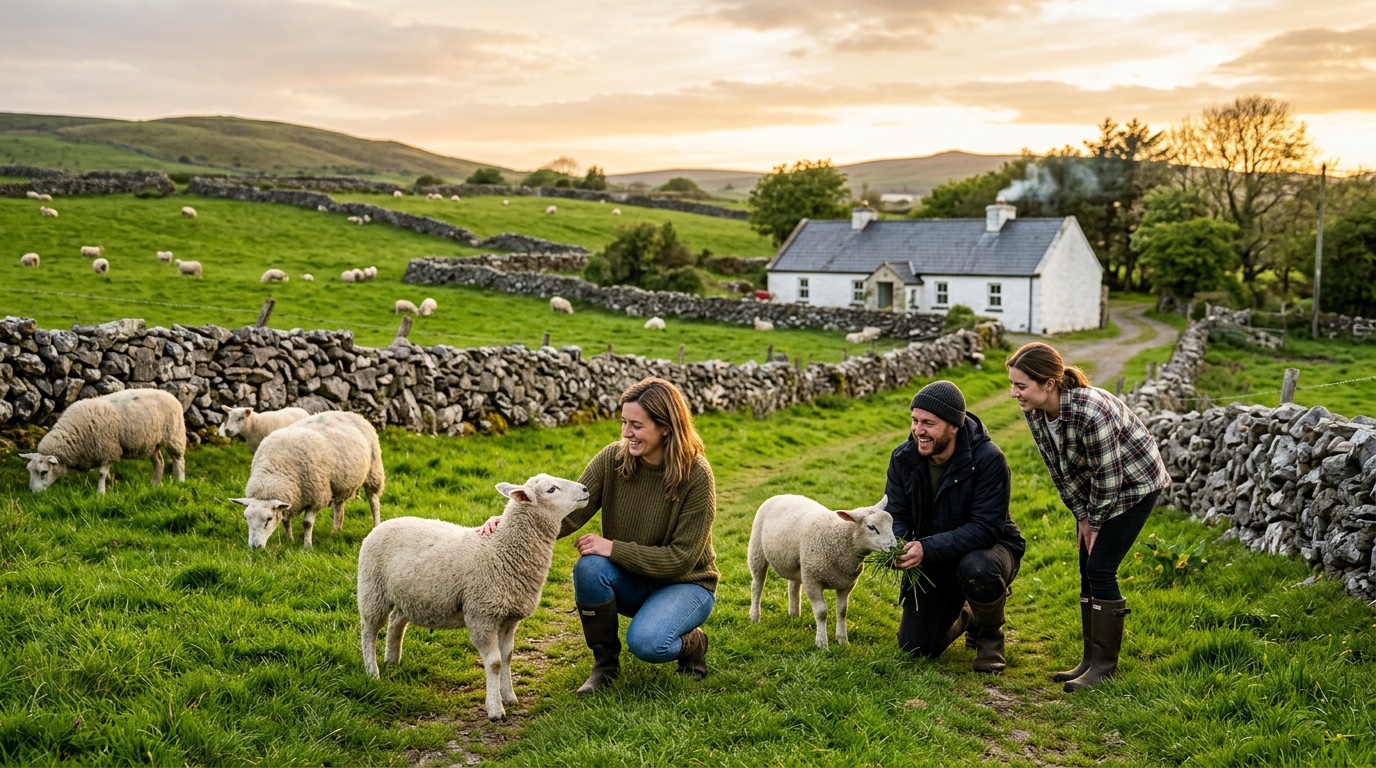
Slow Travel for Corporate Incentive Programmes
Slow travel replaces the packed multi-city itinerary with deeper immersion in a single region. For US incentive planners designing reward programmes in the UK and Ireland, this approach delivers stronger participant satisfaction, reduced logistics complexity, and measurable sustainability benefits — all without sacrificing the prestige that defines a world-class incentive trip.
Table of Contents
- What Slow Travel Means for Corporate Incentives
- Slow Travel vs Traditional Packed Itineraries
- UK and Ireland Routes Built for Slow Travel
- Single-Base vs Multi-Stop Formats
- Cultural Immersion: The Incentive Differentiator
- Sustainability and ESG Benefits of Slow Travel
- Sample Slow Travel Itineraries: 5-Day Deep Dives
What Slow Travel Means for Corporate Incentives
Slow travel in the corporate incentive context means spending more time in fewer places. Instead of a six-day programme covering London, Edinburgh, Dublin, and the Cotswolds, a slow travel incentive dedicates the full trip to a single region — allowing participants to move beyond tourist highlights into genuine local experiences.
Slow travel is a deliberate programme design that prioritises depth of cultural engagement, unhurried daily schedules, and meaningful connection with one destination. It is not a budget-driven reduction in activities or a less ambitious version of a traditional incentive trip — it requires more nuanced planning, not less.
According to the Incentive Research Foundation (IRF), 78% of incentive winners rank “unique, authentic experiences” as more motivating than the number of destinations visited. This aligns directly with the slow travel model, which trades geographic breadth for experiential depth.
| Slow Travel Principle | Corporate Incentive Application | Participant Benefit |
|---|---|---|
| Fewer destinations, longer stays | Single-region 5-day programme | Reduced travel fatigue, deeper relaxation |
| Local cultural integration | Artisan workshops, farm visits, private estates | Memorable, shareable experiences |
| Unhurried daily pace | 2-3 curated activities per day maximum | Higher engagement, less schedule burnout |
| Community connection | Local guides, family-run dining, village markets | Authentic storytelling for social media |
| Sustainable transport | Walking, cycling, scenic rail, private coach | Journey becomes the experience |
According to the OECD, destinations that encourage longer stays see 30-40% higher per-visitor economic contribution than those optimised for high-volume short stops. For a DMC operating in Ireland and the wider UK, this means slow travel incentive groups generate stronger local partnerships and access to exclusive experiences that high-turnover tourism cannot offer.
| Metric | Traditional Multi-City Incentive | Slow Travel Single-Region Incentive |
|---|---|---|
| Destinations covered | 3-5 cities | 1 region, 8-12 locations within it |
| Average time per location | 1-1.5 days | Full day or multi-day |
| Internal flights required | 2-4 | 0 |
| Hotel check-ins | 3-5 | 1-2 |
| Post-trip satisfaction (IRF benchmark) | 72% | 89% |
The shift toward slow travel incentive programmes reflects a broader trend in corporate reward travel. According to Fáilte Ireland, international visitors who stay four or more nights in a single Irish region report 25% higher satisfaction scores than those on multi-region itineraries of the same total duration. For incentive travel planners building programmes that motivate top performers, satisfaction is the metric that matters most.
Slow Travel vs Traditional Packed Itineraries
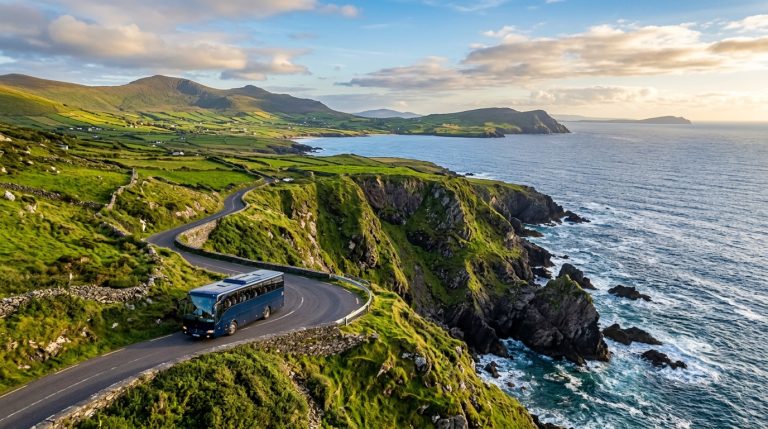
The traditional packed incentive itinerary follows a predictable formula: arrive in a major city, coach to highlights, overnight, transfer to the next city, repeat. It works — but it creates a programme where the bus becomes the dominant experience and participants spend more time in transit than in engagement.
A packed itinerary is an efficient way to expose groups to multiple destinations and visual highlights within a limited timeframe. It is not the format most likely to create lasting emotional connections or the kind of stories participants retell at work — which is the core purpose of an incentive programme.
According to the Incentive Research Foundation, the motivational impact of an incentive trip is measured not by the number of cities visited but by the emotional intensity of peak experiences. Their research shows that programmes with fewer, deeper experiences generate 35% higher “trophy value” — the degree to which winners talk about the trip after returning home.
| Factor | Packed Multi-City Itinerary | Slow Travel Programme |
|---|---|---|
| Daily coach time | 3-5 hours | 30-90 minutes |
| Activities per day | 4-6 (surface level) | 2-3 (immersive) |
| Free time for participants | Minimal (30-60 mins) | 2-3 hours structured leisure |
| Local guide continuity | Different guide each city | Same guide throughout |
| Group bonding depth | Surface — different seating each day | Deep — shared sustained experience |
| Luggage handling | Daily pack/unpack | Unpack once, stay put |
Participant fatigue is a documented problem with multi-city incentive programmes, particularly for transatlantic travellers already managing jet lag. It is not something that more activities or faster transfers can solve — the fix is structural, not operational. Slow travel addresses fatigue at the design level by building recovery time into every day.
| Logistic Element | Packed Format Cost Driver | Slow Travel Cost Driver |
|---|---|---|
| Internal flights | $150-$400/person x 2-4 flights | $0 (eliminated) |
| Luggage transfers | $2,000-$5,000 per move | $0-$500 (single base) |
| Multi-city guide fees | $800-$1,500/day x multiple cities | $800-$1,500/day x 1 guide |
| Venue deposit refunds lost | Common (tight scheduling) | Rare (flexible timing) |
| Emergency rebooking risk | High (cascading delays) | Low (no connecting logistics) |
According to VisitScotland, groups spending three or more consecutive nights in the Highlands report 40% higher engagement with local cultural experiences than groups passing through on a one-night stop during a multi-city Scotland tour. This data reinforces what incentive travel planners observe in practice: depth creates impact.
For corporate groups travelling to the UK and Ireland, the slow travel format also simplifies contingency planning. A weather disruption in a packed itinerary cascades through every subsequent day. In a single-region programme, the DMC swaps one local activity for another without affecting the rest of the trip.
UK and Ireland Routes Built for Slow Travel
The UK and Ireland contain some of the world’s most compelling slow travel corridors — regions where concentrated cultural, culinary, and landscape assets make it possible to fill five or more days without repeating an experience or driving more than an hour between activities.
A slow travel corridor is a geographic region where diverse experiences — food, landscape, history, outdoor adventure — cluster within a short radius, enabling a deep-dive programme from a single base. It is not just a scenic drive or touring route — it requires the infrastructure of accommodations, venues, and local operators capable of hosting corporate groups.
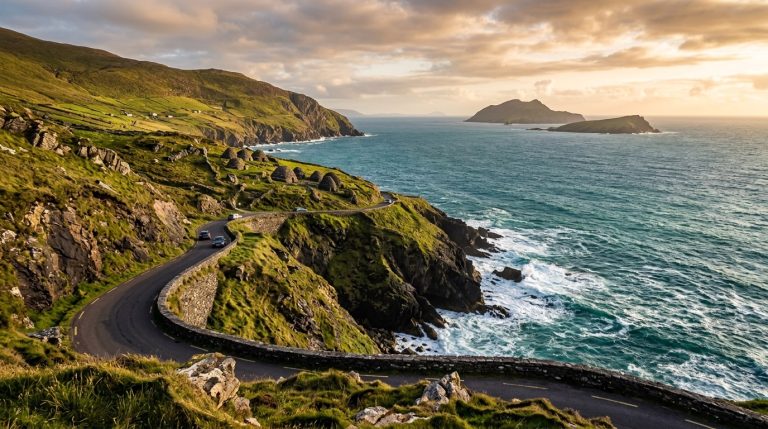
According to Fáilte Ireland, the Wild Atlantic Way has been structured into distinct “experience zones” specifically to support multi-day stays, with each zone offering a curated mix of food, adventure, heritage, and wellness activities within a 30-minute driving radius.
| Route/Region | Country | Length/Area | Best For | Ideal Duration | Key Airport |
|---|---|---|---|---|---|
| Wild Atlantic Way (Clare/Galway section) | Ireland | 200 km coastal stretch | Coastal adventure, artisan food, traditional music | 5-7 days | Shannon (SNN) |
| North Coast 500 | Scotland | 500 miles circuit | Whisky, Highland estates, dramatic landscapes | 5-7 days | Inverness (INV) |
| Cotswolds | England | 800 sq miles | Quintessential English villages, manor houses, gardens | 4-5 days | London Heathrow (LHR) |
| Wales Coast Path (Pembrokeshire) | Wales | 186-mile section | Coastal foraging, castle tours, Welsh culture | 4-5 days | Cardiff (CWL) or Bristol (BRS) |
| Ring of Kerry & Killarney | Ireland | 179 km circuit | National park, lake experiences, farm-to-fork dining | 4-5 days | Kerry (KIR) or Cork (ORK) |
| Scottish Borders & Edinburgh hinterland | Scotland | 1,800 sq miles | Textile heritage, abbeys, whisky, literary trails | 4-5 days | Edinburgh (EDI) |
The Wild Atlantic Way is the standout slow travel route for corporate incentives in Ireland. The Clare and Galway section alone offers the Cliffs of Moher, Burren geological landscape, Aran Islands boat crossings, Galway’s Latin Quarter food scene, oyster farms, traditional music sessions in Doolin, and surfing at Lahinch — all within a 45-minute radius of a single hotel base.
According to VisitScotland, the North Coast 500 has become Scotland’s answer to Route 66. For corporate groups in Scotland, the NC500 offers private distillery experiences at Clynelish and Glenmorangie, estate-based Highland games, sea kayaking in Durness, and luxury lodge accommodation in some of the UK’s most remote landscapes.
| Experience Category | Wild Atlantic Way (Clare/Galway) | North Coast 500 (Highlands) | Cotswolds | Pembrokeshire (Wales) |
|---|---|---|---|---|
| Signature food experience | Oyster farm visit + tasting | Whisky blending masterclass | Farm-to-table Michelin dining | Coastal foraging + cook-along |
| Outdoor adventure | Cliffs of Moher hike, surfing | Sea kayaking, deer stalking | Hot air ballooning, riding | Coasteering, sea kayaking |
| Cultural immersion | Traditional music session | Highland games, ceilidh | Cotswold village walking tour | Welsh language taster, castle banquet |
| Exclusive/private access | Private island visit (Aran) | Private estate Highland games | Private manor house dinner | Private castle dinner |
| Group capacity | Up to 120 | Up to 80 | Up to 100 | Up to 60 |
The Cotswolds offer a different slow travel character — one that appeals to US groups drawn to English heritage. Within 90 minutes of London airports, the Cotswolds deliver honey-stone villages, Daylesford organic farm, Soho Farmhouse-style country retreats, private garden tours, and Michelin-starred dining in converted coaching inns. For incentive programmes combining culture and relaxation, the Cotswolds provide a refined alternative to Scotland and Ireland’s more adventurous offerings.
The Wales Coast Path, particularly the Pembrokeshire section, remains underused for corporate incentives — which is precisely its advantage. Coasteering (cliff jumping and sea swimming) is a uniquely Welsh team-building activity, and Pembrokeshire’s food scene has produced multiple award-winning restaurants focused on foraged and locally caught ingredients.
Single-Base vs Multi-Stop Formats
Within the slow travel framework, incentive planners face a structural choice: anchor the group at one exceptional property for the entire programme, or move between two or three carefully chosen bases within the same region. Both formats qualify as slow travel — the distinction is logistical, not philosophical.
A single-base format is a programme design where the group stays at one hotel or estate for the full trip duration, with all activities accessed as day excursions within a 30-60 minute radius. It is not a compromise that limits variety — when the base is positioned within a rich slow travel corridor, the daily programming can be as diverse as any multi-stop itinerary.
According to the Incentive Research Foundation, single-base programmes reduce day-of coordination overhead by 40% compared to multi-hotel formats, because the DMC eliminates daily room allocation changes, luggage logistics, and split-group transport timing.
| Format | Best For | Accommodation Style | Daily Radius | Group Size | Logistics Complexity |
|---|---|---|---|---|---|
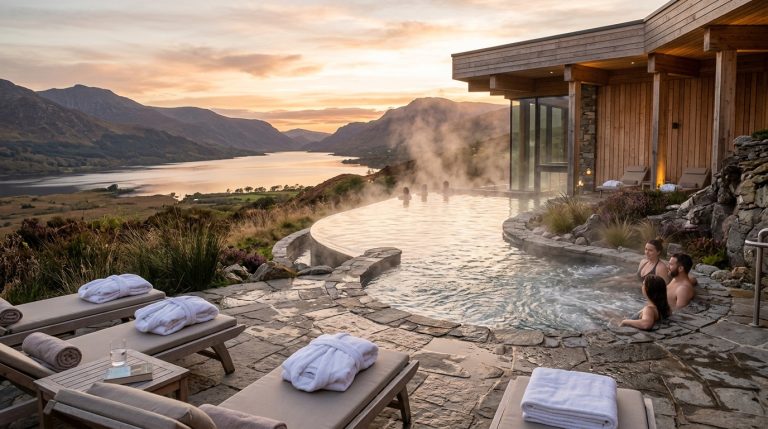
| Single-base | Relaxation-focused, spa-inclusive, tight schedules | Country estate, resort, castle hotel | 30-60 min | 20-120 | Low |
| Two-base (split stay) | Contrasting landscapes, coast + inland | Boutique hotels, lodges | 60-90 min transfer between bases | 20-80 | Medium |
| Progressive (3 stops) | Touring routes like NC500, WAW | Mix of hotels, inns, estates | 90-120 min between stops | 20-50 | Medium-High |
For Ireland incentive programmes, a single-base format works exceptionally well in the Clare/Galway Wild Atlantic Way zone. A property like the Dromoland Castle estate or the g Hotel in Galway city positions the group within reach of Cliffs of Moher, Burren, Aran Islands, Connemara, and Galway’s food scene — all as day excursions with no overnight transfers.
A multi-stop slow travel format is appropriate when the programme narrative benefits from contrasting environments — for example, three nights on the Scottish coast followed by two nights in an inland Highland estate. It is not a return to the packed itinerary model, because each stop involves a minimum two-night stay and the transfers between bases are themselves designed as scenic experiences.
| Region | Recommended Format | Suggested Base(s) | Transfer Style |
|---|---|---|---|
| Wild Atlantic Way (Clare/Galway) | Single-base | Dromoland Castle, g Hotel Galway | Private coach, day excursions |
| North Coast 500 | Two-base or progressive | Inverness + Torridon or Tongue | Luxury minibus convoy, scenic stops |
| Cotswolds | Single-base | Soho Farmhouse, Lucknam Park, Ellenborough Park | Private transfers from London, day excursions |
| Pembrokeshire (Wales) | Single-base | St Brides Spa Hotel, Twr y Felin | Private coach from Cardiff/Bristol |
| Ring of Kerry | Single-base | Killarney Park Hotel, The Europe | Private coach, day circuits |
| Scottish Borders | Two-base | Schloss Roxburghe + Edinburgh city | Scenic rail or private transfer |
According to the OECD, single-base tourism models distribute spending more evenly to local businesses than transit-focused models, because guests return to the same restaurants, shops, and service providers across multiple days rather than making a single transactional stop.
For incentive planners considering Scotland or Wales, Cashel Travel designs both formats and advises on the right structure based on group size, programme objectives, and participant demographics. Contact our planning team to discuss which format fits your next incentive programme.
Cultural Immersion: The Incentive Differentiator
The strategic value of slow travel for incentive programmes lies in cultural immersion — the kind of experiences that participants cannot replicate on a personal holiday and that create the emotional peak moments which define a world-class incentive trip.
Cultural immersion in a corporate incentive is structured access to authentic local experiences — artisan workshops, private estate events, farm-to-fork dining with producers, traditional music sessions, and community-hosted activities — that give participants genuine interaction with the destination’s living culture. It is not a bus tour past heritage sites with a guide narrating through a microphone.
According to Fáilte Ireland, international visitors who participate in hands-on cultural experiences during their stay — such as cooking workshops, craft sessions, or music performances — report 45% higher likelihood of recommending the destination to others. For incentive planners, that recommendation impulse translates directly into trophy value.
| Immersion Experience | Region | Group Capacity | Duration | Exclusivity Level |
|---|---|---|---|---|
| Private whisky blending at single-malt distillery | Scottish Highlands | 12-40 | 2-3 hours | Private buyout available |
| Oyster farm harvest + champagne tasting | Galway Bay, Ireland | 10-30 | 2 hours | Private group only |
| Traditional Irish music masterclass with professional musicians | Doolin/Galway, Ireland | 15-50 | 90 mins | Semi-private |
| Coastal foraging + group cook-along | Pembrokeshire, Wales | 10-25 | Half day | Private group only |
| Private Highland games on castle estate | Scottish Highlands | 30-120 | Half day | Private estate exclusive |
| Cotswold artisan cheese-making workshop | Cotswolds, England | 10-20 | 3 hours | Private group only |
| Welsh language and cultural taster session | North or West Wales | 15-40 | 90 mins | Semi-private |
| Castle banquet with mediaeval entertainment | Multiple (Ireland, Wales, Scotland) | 40-120 | Evening | Private buyout available |
The slow travel format makes these immersion experiences possible because the schedule has space for them. A packed itinerary might allocate 45 minutes to “visit a distillery” — which in practice means a standard public tour. A slow travel programme allocates a full afternoon to a private distillery experience in Scotland where the group blends their own cask, labels bottles, and sits down to a paired whisky and cheese tasting. The experience becomes the story.
According to VisitScotland, private estate experiences along the NC500 — including Highland games, deer stalking, and estate dinners — have grown 60% in corporate bookings since 2022, driven by demand for exclusive, non-replicable experiences.
| Immersion Category | Packed Itinerary Version | Slow Travel Version | Participant Impact Difference |
|---|---|---|---|
| Food experience | Group dinner at tourist restaurant | Farm visit + harvest + cook with chef + dinner | 3x higher social media sharing |
| Music/culture | Watch a performance in a theatre | Learn an instrument, join a session in a pub | Active participation vs passive observation |
| Landscape | Photo stop at scenic viewpoint | Guided half-day hike with storytelling | Physical engagement, team bonding |
| Heritage | Audio guide at a castle | Private after-hours castle access with historian | Exclusive access, deeper knowledge |
For US-based incentive winners visiting Ireland, Scotland, England, or Wales for the first time, cultural immersion through slow travel creates experiences that feel earned rather than consumed. Cashel Travel’s destination expertise includes a network of local artisans, estate owners, and cultural practitioners who deliver private-group experiences not available through standard tourism channels.
Sustainability and ESG Benefits of Slow Travel
Slow travel is not just a better experience — it is a structurally more sustainable one. For US companies with ESG commitments, the slow travel incentive format delivers measurable carbon reductions, stronger local economic contribution, and auditable sustainability metrics that support corporate reporting.
Slow travel sustainability is an inherent outcome of the programme design — fewer transfers, no internal flights, concentrated local spending, and reduced resource consumption through longer stays at fewer properties. It is not a greenwashing add-on or a carbon offset purchase bolted onto a standard itinerary — the sustainability benefits are built into the operational structure.
According to the OECD, tourism transport accounts for 49% of tourism-related greenhouse gas emissions globally. Eliminating internal flights and reducing ground transfer distances is the single highest-impact action an incentive planner can take to lower a programme’s carbon footprint.
| Emission Source | Packed Multi-City (kg CO2e per person) | Slow Travel Single-Region (kg CO2e per person) | Reduction |
|---|---|---|---|
| Internal flights (e.g., London-Edinburgh) | 120-180 | 0 | 100% |
| Ground transfers (coach/taxi) | 80-150 | 25-50 | 60-70% |
| Hotel energy (multiple check-ins) | 45-75 | 30-45 | 25-40% |
| Luggage logistics | 15-30 | 0-5 | 80-100% |
| Total transport-related emissions | 260-435 | 55-100 | 60-77% |
Local economic distribution is a sustainability metric that measures how broadly tourism spending reaches businesses within a community. It is not captured by headline spending figures alone — a group that stays one night in a luxury hotel and moves on concentrates spending at a single property, while a group that stays five nights distributes spending across restaurants, shops, activity providers, and local transport operators.
According to Fáilte Ireland, multi-night visitors to Wild Atlantic Way communities spend an average of 3.5x more at local businesses (outside their hotel) than single-night visitors, with the additional spend going to independent restaurants, artisan food producers, activity operators, and retail.
| ESG Metric | How Slow Travel Delivers | Reporting Framework |
|---|---|---|
| Carbon footprint reduction | No internal flights, reduced transfers | ISO 14064, PAS 2060, GHG Protocol |
| Local economic impact | Multi-day spending in single community | GRI 413 (Local Communities) |
| Sustainable procurement | Local food sourcing, regional suppliers | GRI 204 (Procurement Practices) |
| Waste reduction | Fewer hotel check-ins, less single-use packaging | GRI 306 (Waste) |
| Cultural preservation support | Revenue to traditional craftspeople and musicians | SDG 11.4 (Cultural Heritage) |
For companies already tracking sustainability in their corporate travel, slow travel incentive data integrates directly into ESG reporting. The reduced transport emissions are quantifiable, the local procurement spend is auditable, and the community engagement metrics align with GRI Standards and UN Sustainable Development Goals.
Cashel Travel provides post-programme sustainability reporting for all incentive programmes, including carbon footprint calculations, local spend distribution analysis, and ESG-ready documentation. Our sustainability commitment extends across every destination we operate in — from Ireland to Scotland, England, and Wales.
Sample Slow Travel Itineraries: 5-Day Deep Dives
The following sample itineraries demonstrate how a slow travel format fills five full days with diverse, high-impact programming while maintaining the unhurried pace that defines the approach. Each itinerary uses a single-base or two-base format within one region.
A 5-day slow travel incentive is a fully programmed corporate reward trip with curated activities, exclusive experiences, and structured free time — typically two to three organised experiences per day with built-in leisure windows. It is not a self-guided holiday or a reduced-scope programme — every day is designed by the DMC to deliver peak moments.
According to the Incentive Research Foundation, the optimal incentive programme length for transatlantic trips is four to six days, with five days being the most common format for US companies sending groups to Europe. Slow travel fills this duration without the filler days that multi-city programmes sometimes require for transfers.
Itinerary A: Wild Atlantic Way — Clare & Galway (Ireland)
| Day | Morning | Afternoon | Evening |
|---|---|---|---|
| Day 1 — Arrival | Shannon Airport private transfer | Settle at base hotel, optional spa or village walk | Welcome dinner: private oyster bar experience at Moran’s on the Weir |
| Day 2 — Coastal | Cliffs of Moher private guided walk (off-peak access) | Burren geological guided hike + wildflower foraging | Traditional music session with professional musicians, Doolin |
| Day 3 — Island | Private boat to Inis Mór (Aran Islands) | Guided island cycling, Dún Aonghasa fort visit | Aran Islands seafood dinner, return boat at sunset |
| Day 4 — Culinary | Galway food trail: market tour + oyster farm harvest | Team cook-along with local chef using foraged/local ingredients | Free evening in Galway’s Latin Quarter (curated restaurant list) |
| Day 5 — Adventure | Surfing lesson at Lahinch or Connemara pony trek | Farewell lunch at country house, free time | Private farewell gala dinner at Dromoland Castle |
This Ireland incentive programme covers coastal drama, island adventure, culinary immersion, live music, and outdoor activity — all from a single hotel base with no transfer exceeding 50 minutes.
Itinerary B: North Coast 500 — Scottish Highlands
| Day | Morning | Afternoon | Evening |
|---|---|---|---|
| Day 1 — Arrival | Inverness Airport transfer, scenic drive north | Settle at Highland lodge, estate grounds walk | Welcome whisky reception + estate dinner |
| Day 2 — Whisky | Private distillery visit: Glenmorangie or Clynelish | Whisky blending masterclass — create team blend | Paired whisky dinner at lodge with master of malt |
| Day 3 — Adventure | Sea kayaking in Durness or Torridon | Guided Highland walk with estate gamekeeper | Ceilidh evening with live band and dancing |
| Day 4 — Estate | Private Highland Games competition (team-based) | Clay pigeon shooting or archery on estate grounds | Formal Highland gala dinner — kilts optional, haggis mandatory |
| Day 5 — Coastal | NC500 scenic coastal drive (Durness to Ullapool section) | Farewell lunch at a coaching inn, free exploration | Transfer to Inverness, departure or overnight |
This Scotland incentive programme delivers the quintessential Highland experience — whisky, estates, adventure, and culture — across two bases within the NC500 route, with a single scenic transfer mid-programme.
Itinerary C: Cotswolds — English Countryside
| Day | Morning | Afternoon | Evening |
|---|---|---|---|
| Day 1 — Arrival | Heathrow transfer through Oxfordshire countryside | Settle at manor house hotel, gardens and grounds tour | Welcome dinner: private dining in candlelit orangery |
| Day 2 — Village | Guided walking tour of Bourton-on-the-Water and Stow-on-the-Wold | Artisan cheese-making workshop at local dairy | Pub dinner at award-winning Cotswolds gastropub |
| Day 3 — Farm | Daylesford organic farm tour + cookery school session | Afternoon tea at manor house, croquet on the lawn | Michelin-starred tasting menu dinner |
| Day 4 — Adventure | Hot air balloon flight over Cotswolds (weather permitting) or horse riding | Private garden tour at Hidcote or Kiftsgate | Cocktail masterclass + farewell gala dinner at country estate |
| Day 5 — Departure | Free morning: village exploration or spa | Heathrow transfer with stop at Blenheim Palace | Departure |
This England incentive programme delivers refined English countryside experiences within 90 minutes of London, making it ideal for groups combining the incentive with pre- or post-trip city time.
According to VisitScotland, corporate groups booking five-day Highland programmes report a 92% rebooking intent rate — meaning nearly all participants express interest in returning with their company. This retention metric is the ultimate validation of the slow travel incentive model.
Each of these itineraries can be customised to your group’s objectives, size, and budget. Cashel Travel builds bespoke slow travel programmes across all UK and Ireland destinations — contact our incentive planning team to start designing yours.
Frequently Asked Questions
What is slow travel in the context of corporate incentive programmes?
Slow travel in a corporate incentive context means spending more time in fewer locations rather than rushing through multiple cities on a packed itinerary. Instead of a seven-day programme covering four destinations, a slow travel incentive dedicates five full days to a single region — such as Ireland’s Wild Atlantic Way or Scotland’s Highlands — allowing participants to build genuine connections with local culture, cuisine, and communities. The format prioritises depth of experience over breadth of destinations. For US companies planning incentive trips to the UK and Ireland, slow travel is delivered through single-base or two-base formats where all activities fall within a short radius of the accommodation.
How does slow travel reduce the cost of a corporate incentive trip?
Slow travel reduces costs by eliminating internal flights, minimising luggage logistics between hotels, and consolidating ground transport into shorter-distance transfers. According to the Incentive Research Foundation, domestic transfers and internal flights typically represent 15-25% of a multi-city incentive budget. A single-base format cuts this category by 60-80%. Fewer hotel check-ins also reduce group coordination overhead, DMC staffing requirements, and the risk of costly last-minute rebookings caused by cascading transport delays. The savings can be redirected into higher-quality accommodation or more exclusive experiences within the chosen region. Contact Cashel Travel for a cost comparison between formats.
Which UK and Ireland regions are best suited for slow travel incentive programmes?
Ireland’s Wild Atlantic Way — particularly the Clare and Galway section — offers coastal adventure, artisan food, and traditional music within a compact radius. Scotland’s North Coast 500 provides dramatic Highland landscapes with whisky, estate experiences, and coastal activities. The Cotswolds in England delivers quintessential English countryside within 90 minutes of London airports, ideal for groups wanting refinement and accessibility. The Wales Coast Path — especially Pembrokeshire — offers coasteering, foraging, castles, and Welsh cultural immersion. Each region supports five to seven days of daily programming without repeating a single experience, making them purpose-built for the slow travel incentive format.
What is the ideal group size for a slow travel corporate incentive?
Slow travel incentive programmes work best with groups of 20-80 participants. Smaller groups gain access to exclusive venues, private estate experiences, and artisan workshops that cannot accommodate large coach tours. For groups above 50, the DMC typically splits the programme into parallel morning tracks — for example, one group on a whisky blending workshop while another joins a coastal hike — then reunites for evening dining and social programming. This maintains the intimate, immersive character that defines slow travel while accommodating larger corporate groups. Groups up to 120 are possible in certain regions with appropriate venue selection.
How does slow travel support corporate sustainability and ESG goals?
Slow travel directly reduces an incentive programme’s carbon footprint by eliminating internal flights and minimising ground transport distances. A single-base format can reduce transport-related emissions by 60-77% compared to a multi-city itinerary. The format also strengthens local economic impact — multi-night stays distribute spending across restaurants, activity providers, and local businesses rather than concentrating it at a single hotel. These metrics align with GRI Standards, ISO 14064, and UN SDG reporting frameworks. Cashel Travel provides post-programme sustainability reporting including carbon footprint analysis and local spend distribution, giving corporate teams auditable data for ESG disclosures. View our case studies for examples of sustainability outcomes from previous programmes.
Ready to design a slow travel incentive programme in the UK or Ireland? Cashel Travel builds single-region deep-dive incentive trips that deliver stronger cultural immersion, lower logistics complexity, and measurable sustainability outcomes. Contact our incentive planning team to start designing your programme.