MICE Tourism in the UK and Ireland
MICE tourism — Meetings, Incentives, Conferences, and Exhibitions — represents one of the highest-value segments in corporate travel. For US-based event planners considering transatlantic programmes, the UK and Ireland deliver a rare combination: world-class venues, English-speaking environments, strong air connectivity, and cultural depth that transforms business events into memorable experiences. This guide breaks down every component of MICE across both destinations.
Table of Contents
- What Is MICE Tourism and Why It Matters
- Why the UK and Ireland for Your Next MICE Programme
- The M — Meetings: From Boardrooms to Country Estates
- The I — Incentives: Reward Travel That Delivers ROI
- The C — Conferences: Major Venues and Capacities
- The E — Exhibitions: Trade Show Infrastructure
- City-by-City MICE Comparison
- Why a DMC Outperforms Direct Booking for MICE
- Sustainability and Hybrid Events in UK and Ireland MICE
- Frequently Asked Questions
What Is MICE Tourism and Why It Matters
MICE tourism is a global industry valued at over $1.2 trillion in 2025, projected to reach $3 trillion by 2034. It is not a niche segment limited to Fortune 500 companies or mega-conferences — MICE encompasses everything from a 20-person executive strategy meeting in a Dublin boardroom to a 5,000-delegate pharmaceutical conference at ExCeL London.
According to Fortune Business Insights, the global MICE market is growing at a compound annual rate of 10.86%, driven by corporate demand for face-to-face engagement, employee reward programmes, and knowledge-sharing events. Europe commands over 51% of the global MICE market share, with the UK and Ireland sitting at the centre of that dominance.
The four pillars break down as follows:
| MICE Component | Purpose | Typical Group Size | Duration |
|—|—|—|—|
| Meetings | Strategic planning, board sessions, team alignment | 10–100 | 1–3 days |
| Incentives | Employee or partner reward travel | 20–500 | 3–7 days |
| Conferences | Knowledge sharing, industry networking, keynotes | 100–10,000+ | 2–5 days |
| Exhibitions | Product showcases, trade shows, brand activations | 500–50,000+ | 1–5 days |
For US corporate planners evaluating destinations for their next programme, understanding these distinctions shapes every decision from venue selection to budget allocation.
Why the UK and Ireland for Your Next MICE Programme
The UK and Ireland consistently rank among the world’s top MICE destinations. According to ICCA’s 2024 GlobeWatch Rankings, the United Kingdom placed 5th globally for international association meetings, while Dublin ranked among the top 10 cities worldwide. London, Edinburgh, Belfast, and Manchester each appear in European top-tier rankings.
Several structural advantages make these destinations compelling for US-based planners:
Time zone proximity. The UK and Ireland sit 5–8 hours ahead of US time zones. A morning session in London finishes while the US East Coast is still in its working day — ideal for hybrid events requiring real-time transatlantic participation.
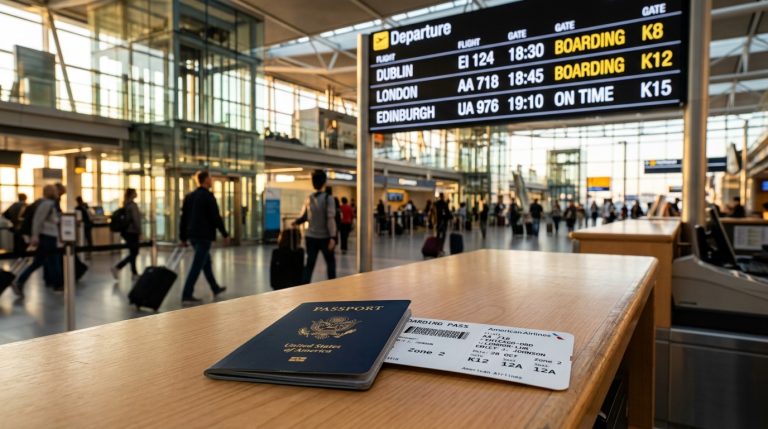
Air connectivity. Direct flights connect over 20 US cities to London, Dublin, Edinburgh, Manchester, and Belfast. Flight times from New York average 6.5–7.5 hours, comparable to a US transcontinental flight.
English-speaking environment. No language barrier means reduced friction for signage, vendor coordination, delegate communications, and on-site logistics.
Regulatory simplicity. US passport holders can enter both the UK and Ireland visa-free for business events up to 90 days, eliminating visa processing delays that complicate MICE planning in other European markets.
According to the UK Events Report 2025, the UK events industry is now valued at £68.7 billion, with business events — conferences, exhibitions, meetings, and incentive travel — contributing £33.6 billion of that total. Ireland’s North American tourism market alone is worth nearly €2 billion annually, with business travel representing a growing share.
The M — Meetings: From Boardrooms to Country Estates
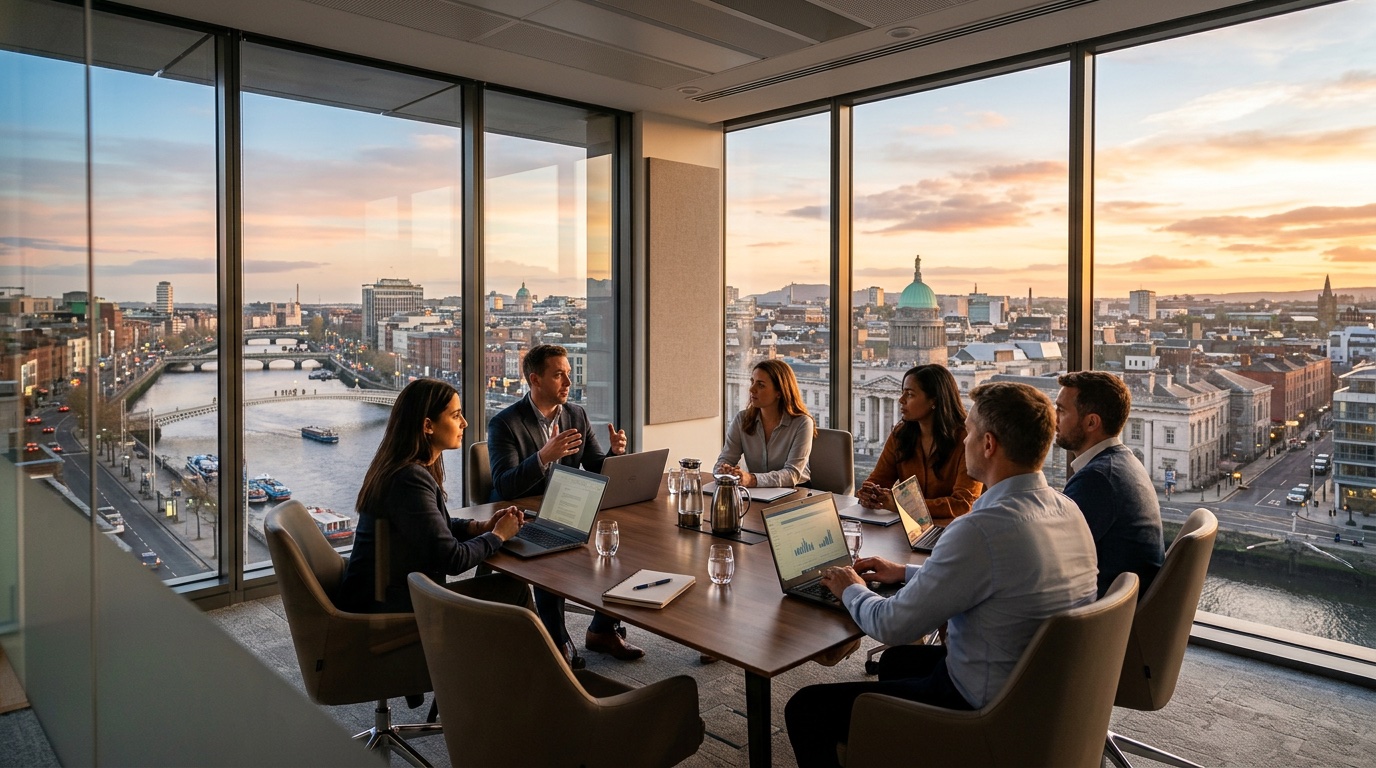
Corporate meetings in the UK and Ireland benefit from a venue landscape that goes far beyond generic hotel conference rooms. From Georgian townhouses in Edinburgh to converted castles in the Irish countryside, the range of meeting environments available creates opportunities to match venue atmosphere with meeting objectives.
For strategic off-site meetings, unique venues consistently outperform conventional spaces in delegate engagement. A board-level strategy session held in a 16th-century Scottish castle creates a different energy than the same agenda in a downtown hotel — and both options exist within easy reach of international airports.
Key meeting venue categories across the region include:
| Venue Type | Capacity Range | Best For | Example Locations |
|—|—|—|—|
| Country house hotels | 10–80 | Executive retreats, board meetings | Gleneagles, Ashford Castle, Adare Manor |
| City-centre boardroom suites | 8–30 | Working sessions, negotiations | London, Dublin, Edinburgh financial districts |
| University venues | 20–500 | Training programmes, seminars | Trinity College Dublin, University of Edinburgh |
| Historic properties | 10–200 | Client entertainment, team building | Edinburgh Castle, Hampton Court Palace |
| Boutique meeting spaces | 10–50 | Creative workshops, innovation labs | Shoreditch (London), Temple Bar (Dublin) |
A Destination Management Company adds value at the meeting level by sourcing venues that align with the meeting’s purpose, negotiating day-delegate rates, coordinating AV requirements, and managing catering to dietary specifications across international groups. Cashel Travel’s local teams across England, Scotland, Wales, and Ireland handle the logistics so planners can focus on content and outcomes.
The I — Incentives: Reward Travel That Delivers ROI
Incentive travel is the highest per-person spend category within MICE, with programmes designed to reward top performers, build loyalty, and drive future business results. It is not simply a group holiday — effective incentive programmes combine aspirational experiences with strategic networking and brand alignment.
The UK and Ireland offer incentive planners a density of world-class experiences within compact geographies. A five-day incentive programme can combine London’s cultural landmarks with the Scottish Highlands or Ireland’s Wild Atlantic Way without excessive internal travel times.
High-impact incentive experiences include:
- Castle buyouts — Exclusive-use properties like Dromoland Castle (Ireland), Borthwick Castle (Scotland), or Thornbury Castle (England) provide once-in-a-lifetime settings for gala dinners and group stays
- Whiskey and distillery trails — From Islay’s single malts to Dublin’s whiskey quarter, bespoke tasting experiences create shareable moments with authenticity
- Golf programmes — St Andrews, Royal Portrush, Ballybunion, and Wentworth offer bucket-list rounds that few other destinations can match
- Culinary experiences — Michelin-starred private dining, farm-to-table experiences in the Cotswolds, and seafood feasts along the Irish coast
- Adventure and outdoor — Highland games team building, cliff walks, falconry, equestrian programmes, and private yacht charters
According to the Incentive Research Foundation, well-designed incentive programmes generate an ROI of 4:1 through increased productivity, reduced turnover, and higher revenue from rewarded performers. The UK and Ireland’s blend of prestige, accessibility, and experiential depth makes them consistent top choices for US incentive buyers.
Cashel Travel’s incentive specialists design bespoke itineraries that balance group programming with personal choice, ensuring every destination touchpoint reinforces the programme’s objectives. View examples of past programmes in our case studies.
The C — Conferences: Major Venues and Capacities
The UK and Ireland’s purpose-built convention centres rank among Europe’s finest, offering the scale, technology, and accessibility that large conferences demand. For US planners accustomed to venues like McCormick Place or the Javits Center, the region’s venues deliver comparable infrastructure with the added draw of culturally rich host cities.
Here is a comparison of the major convention centres across the region:
| Venue | City | Max Delegates | Exhibition Space | Key Feature |
|—|—|—|—|—|
| ExCeL London | London | 7,000+ (ICC auditorium up to 5,000) | 100,000 m² | UK’s largest venue, DLR connected |
| The Convention Centre Dublin (CCD) | Dublin | 8,000 | 4,500 m² | Docklands waterfront, 1,995-seat auditorium |
| EICC | Edinburgh | 2,000 | 2,000 m² | City-centre location, UNESCO World Heritage setting |
| ICC Belfast | Belfast | 5,000 | 7,000 m² | Northern Ireland’s only purpose-built ICC |
| Manchester Central | Manchester | 10,000 | 23,000 m² | Iconic arched roof, central location |
| ICC Wales | Newport | 4,100 | 26,000 m² (Celtic Manor complex) | Integrated with Celtic Manor Resort |
According to the ICCA 2024 rankings, Dublin ranked among the top 10 cities globally for international association meetings, while London remains one of Europe’s most active conference cities. Belfast has emerged as one of the fastest-growing MICE destinations in the British Isles, with ICC Belfast hosting major events since its 2018 opening.
Each venue offers full-service AV and production, on-site catering, hybrid broadcast capabilities, and accessibility compliance — the baseline requirements for any serious conference programme. Cashel Travel’s conference division coordinates delegate management, airport transfers, accommodation blocking, and social programme logistics across all of these destinations.
The E — Exhibitions: Trade Show Infrastructure
Exhibition and trade show capabilities across the UK and Ireland span from dedicated mega-venues to flexible convention spaces that convert for exhibition use. For US companies launching products in European markets or hosting client-facing showcases, these venues provide the infrastructure and footfall access that exhibitions demand.
ExCeL London anchors the region’s exhibition capacity with 100,000 square metres of flexible space, regularly hosting events like DSEI, the World Travel Market, and ICE London. Manchester Central adds 23,000 square metres under its distinctive arched roof, while the NEC Birmingham — though not detailed in this guide — provides a further 186,000 square metres for the UK’s largest trade shows.
ICC Wales, integrated within the Celtic Manor Resort complex near Newport, provides 26,000 square metres of combined space and has positioned itself as a compelling alternative to London for exhibitions that benefit from a residential conference setting.
For Ireland-based exhibitions, the Convention Centre Dublin offers 4,500 square metres of exhibition space distributed across six flat-floored halls. The RDS in Dublin adds further capacity for consumer and trade exhibitions, regularly hosting events up to 40,000 visitors.
Key exhibition planning considerations for US organisers include:
- Freight and customs — Post-Brexit, goods moving between the UK and Ireland require customs documentation; a DMC ensures smooth logistics
- Stand build regulations — UK and Irish venues follow specific health and safety build standards that differ from US conventions
- Electrical standards — UK venues use 240V/50Hz; equipment compatibility and transformer needs should be planned in advance
- Contractor coordination — Local stand builders, AV suppliers, and caterers operate on different timelines and procurement norms than US equivalents
A DMC like Cashel Travel manages these operational details, coordinating with venue teams and local suppliers to deliver exhibitions that meet the standards US organisers expect. Contact our events team to discuss exhibition support.
City-by-City MICE Comparison
Selecting the right host city is one of the earliest and most consequential decisions in MICE planning. Each UK and Ireland city brings distinct strengths depending on event type, group size, budget, and programme objectives.
| City | Best For | International Airport | Top Venue | Unique Advantage |
|—|—|—|—|—|
| London | Large conferences, exhibitions, high-profile events | Heathrow (LHR), Gatwick (LGW), City (LCY) | ExCeL London | Global hub, unmatched hotel inventory |
| Dublin | Mid-size conferences, incentive add-ons, tech sector | Dublin (DUB) | Convention Centre Dublin | Top-10 ICCA city, tech/pharma cluster |
| Edinburgh | Premium incentives, intimate conferences, cultural programmes | Edinburgh (EDI) | EICC | UNESCO World Heritage city, festival calendar |
| Belfast | Emerging MICE, value positioning, unique venues | Belfast (BFS/BHD) | ICC Belfast | Titanic Quarter, competitive pricing |
| Manchester | Large conferences, northern England base, nightlife | Manchester (MAN) | Manchester Central | UK’s second city, strong transport links |
| Cardiff | Residential conferences, Welsh incentive programmes | Cardiff (CWL), Bristol (BRS) | ICC Wales | Celtic Manor integration, compact city |
For multi-city MICE programmes, the UK and Ireland’s compact geography enables creative itineraries. A conference in Dublin can pair with an incentive extension along the Wild Atlantic Way. A London exhibition can precede a team-building retreat in the Scottish Highlands. Belfast and Dublin sit just two hours apart by road, enabling cross-border programmes that span both jurisdictions.
Cashel Travel operates local teams across all six cities, providing consistent service standards with genuine local expertise. Explore our full destination portfolio or review past programmes to see how multi-city MICE itineraries come together.
Why a DMC Outperforms Direct Booking for MICE
For US planners managing MICE programmes across the Atlantic, the question of whether to book directly, use a general travel agent, or engage a Destination Management Company often comes down to risk, efficiency, and quality.
A DMC is your on-the-ground partner with established venue relationships, local regulatory knowledge, and real-time problem-solving capability. It is not an intermediary that simply marks up hotel rates — a strong DMC reduces total programme cost through negotiated rates, prevents costly mistakes, and delivers creative programming that direct booking cannot replicate.
The value becomes clearest in complex, multi-component MICE programmes:
- Venue sourcing and negotiation — DMCs maintain preferred relationships with hundreds of venues, securing rates and concessions unavailable through direct enquiry
- Logistics coordination — Airport transfers, ground transport, delegate registration, dietary management, and on-site staffing fall under one accountable partner
- Creative programming — Gala dinner theming, team-building design, spouse programmes, and cultural excursions require local knowledge and supplier networks
- Risk management — Contingency planning, insurance guidance, health and safety compliance, and real-time crisis response protect the planner and the programme
- Budget optimisation — DMCs identify savings across the supply chain that offset their management fee, often delivering net cost reductions versus direct booking
According to ADMEI (the Association of Destination Management Executives International), companies using DMCs for international MICE programmes report 23% higher delegate satisfaction scores and 18% fewer on-site issues compared to self-managed events.
Cashel Travel has delivered MICE programmes across the UK and Ireland for US corporate clients for over two decades. Get in touch to discuss how we can support your next programme.
Sustainability and Hybrid Events in UK and Ireland MICE
Sustainability has moved from a reporting checkbox to a procurement requirement for US corporate event planners. ESG mandates, Scope 3 emissions tracking, and delegate expectations now demand that MICE programmes demonstrate measurable environmental responsibility.
The UK and Ireland’s MICE infrastructure has responded. Major venues including ExCeL London, the EICC, and the Convention Centre Dublin hold ISO 20121 sustainable events certification. ICC Belfast achieved a BREEAM Excellent rating at construction. The Celtic Manor Resort and ICC Wales complex has invested in on-site renewable energy and waste reduction programmes.
Practical sustainability measures available across both destinations include:
- Carbon offset partnerships integrated into delegate registration platforms
- Plant-forward and locally sourced catering replacing traditional banquet menus
- Digital delegate packs eliminating printed materials
- Venue-provided reusable badge and lanyard systems
- Public transport proximity — every major convention centre sits on or adjacent to rail, tram, or metro networks
Hybrid event capability is equally strong. Post-2020 investment in broadcast infrastructure means every major venue listed in this guide offers studio-grade hybrid production: multi-camera setups, professional streaming platforms, audience interaction tools, and on-demand recording. For US companies with global teams, this allows partial in-person attendance in the UK or Ireland with virtual participation from other regions.
Ireland’s national tourism policy targets a 60% carbon reduction by 2030, and the UK government’s net-zero commitments increasingly shape venue procurement and supply chain standards. Planners selecting UK and Ireland MICE destinations can align their programmes with corporate sustainability reporting requirements from the outset.
Frequently Asked Questions
What does MICE stand for in tourism?
MICE stands for Meetings, Incentives, Conferences, and Exhibitions. It is the collective term for the business events segment of the travel industry. MICE tourism covers everything from small executive meetings and employee reward trips to large international conferences and trade exhibitions. The sector is valued at over $1.2 trillion globally and represents one of the highest per-delegate spend categories in travel. For US companies, MICE programmes in the UK and Ireland combine productive business outcomes with culturally rich destination experiences.
Why are the UK and Ireland popular MICE destinations for US companies?
Several factors drive consistent US demand for UK and Ireland MICE programmes. Both destinations are English-speaking, removing language barriers that complicate event logistics in continental Europe. Time zone proximity (5–8 hours from US zones) enables same-day hybrid participation. Direct flights connect over 20 US cities to London, Dublin, Edinburgh, Manchester, and Belfast, with average transatlantic flight times of 6.5–7.5 hours. The UK’s events industry is valued at £68.7 billion, and both countries offer purpose-built convention centres, unique incentive venues, and established DMC networks. Explore our destinations to see the full range of options.
What is the largest convention centre in the UK?
ExCeL London is the largest convention and exhibition venue in the UK, with 100,000 square metres of flexible event space. Its ICC auditorium seats up to 5,000 delegates in theatre configuration, and the venue can host multiple large-scale events simultaneously. Outside London, Manchester Central offers over 23,000 square metres, while ICC Wales at the Celtic Manor Resort provides 26,000 square metres of combined space. In Ireland, the Convention Centre Dublin accommodates up to 8,000 delegates with 4,500 square metres of dedicated exhibition space. See our full venue comparison above.
How does a DMC add value to MICE events in the UK and Ireland?
A Destination Management Company provides local expertise that cannot be replicated by direct booking or general travel agencies. DMCs like Cashel Travel maintain preferred relationships with venues, hotels, transport providers, and activity suppliers across England, Scotland, Wales, and Ireland. This translates to negotiated rates, creative programming, on-the-ground logistics management, risk mitigation, and a single point of accountability for complex multi-component events. For US planners managing events across the Atlantic, a DMC eliminates the coordination challenges of working across time zones with unfamiliar vendors.
What is the average cost of a MICE event in the UK and Ireland?
MICE event costs vary significantly by type, venue, group size, and programming complexity. As a general guide: a mid-range corporate conference for 200 delegates in a UK or Irish city typically costs £150–£350 per person per day covering venue hire, catering, and AV. Incentive programmes with experiential activities, unique venue buyouts, and premium dining range from £300–£800 per person per day. Exhibition costs depend on stand size, build complexity, and venue hire rates. A DMC helps optimise budgets by leveraging volume pricing and local supplier relationships. Contact Cashel Travel for a tailored cost estimate based on your programme requirements.
Ready to plan your next MICE programme in the UK or Ireland? Cashel Travel has delivered corporate meetings, incentive travel, conferences, and exhibition support for US-based companies for over two decades. Our local teams across England, Scotland, Wales, Ireland, and Northern Ireland provide single-partner accountability with genuine destination expertise. Contact us today to start the conversation.